Yes, Kodiak bears are real. The Kodiak bear (Ursus arctos middendorffi) is a subspecies of brown bear that lives only on the Kodiak Archipelago in southwest Alaska. About 3,500 of them roam the islands today, and they have been cut off from every other bear population for roughly 12,000 years.
We get asked this question more than you might think. So here’s the full answer: why people doubt these bears exist, where they actually live, and what the word “Kodiak” really means.
The Short Answer: A Real Bear on a Real Island
Kodiak bears are a genuine, scientifically recognized subspecies. Taxonomist C. H. Merriam first described them in 1896 and named them in honor of the Baltic naturalist Alexander von Middendorff, which is where the middendorffi comes from.
They live on the islands of the Kodiak Archipelago, including Kodiak, Afognak, Shuyak, Raspberry, Uganik and Sitkalidak. When the last ice age ended, rising seas isolated the bears on these islands. Over about 12,000 years they became a population of their own.
A few facts that prove they are very much alive:
- About 3,500 bears live on the archipelago, according to the US Fish & Wildlife Service, and Alaska Department of Fish & Game reports the population as stable to increasing.
- They hold the world record. The Boone and Crockett Club’s world-record bear is a Kodiak brown bear, with a skull measuring 30.75 inches (length plus width).
- They are one of the two largest bears on Earth. Only the polar bear rivals them. See how the two compare in Titans of the North: Kodiak Brown Bears vs. Polar Bears.

Why Do People Think Kodiak Bears Aren't Real?
If you’ve searched “is the Kodiak bear real,” you’re not alone. There are a few good reasons for the doubt.
The photos look fake. A full-grown male Kodiak standing next to a person looks like an edited image. In an age of AI pictures, it’s fair to be skeptical. Our guide to the weight and power of Kodiak bears and how tall a Kodiak brown bear really is puts real numbers on it.
“Kodiak” is a name people know from other things. Brands, products, vehicles and even pets carry the name. Many people meet the word long before they meet the bear.
They live in one remote place. You won’t find wild Kodiak bears anywhere else in the world. Most people will never see one outside a photo or documentary, so the bear can start to feel like a legend.
People confuse them with grizzlies. Some assume “Kodiak” is just a nickname for a big grizzly. It isn’t quite that simple. We explain the difference in Kodiak vs. Grizzly: Same Bear, Different Name?
What Does "Kodiak" Mean?
“Kodiak” means “island.” The name most likely comes from the Alutiiq word qik’rtaq, meaning island.
Here’s how the word made its way into English:
Thousands of years ago, the Alutiiq people of the archipelago called their home Qik’rtaq. Add the suffix -miut, meaning “people of,” and you get Qik’rtarmiut: “people of the island.”
1763: Russian fur trader Stepan Glotov reached the island. The Russians called it Kad’yak, after the Alutiiq word.
1778: Captain James Cook used a version of the name in English for the first time.
1901: the official spelling changed from Kadiak to Kodiak, to match the way locals said it.
So a “Kodiak bear” is, quite literally, an “island bear.” The name is a fitting one for an animal shaped by 12,000 years of island life.
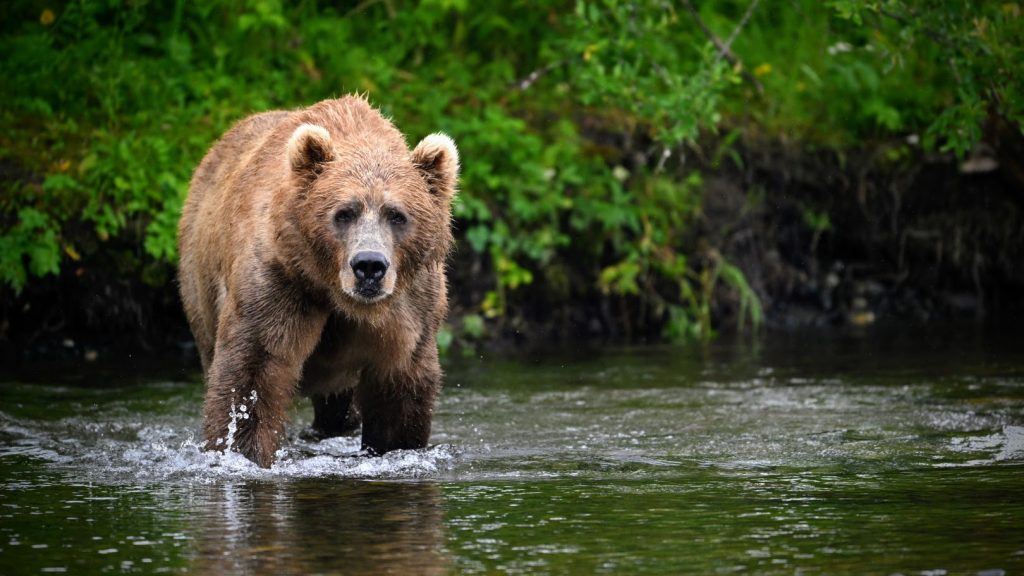
We invite you to visit our home, and promise unforgettable memories of your time spent in the heart of Alaska’s wilderness.
— Kodiak Brown Bear Center & Lodge, Alutiiq-owned since time immemorial
Plan Your VisitAn Indigenous Homeland, Not Just a Bear Habitat
The Alutiiq people have lived on Kodiak Island for more than 7,000 years. Kodiak Brown Bear Center & Lodge is owned by Koniag, the Alaska Native Regional Corporation that represents the Alutiiq people of Kodiak. That makes us an Indigenous-owned business on Alutiiq homeland.
In Alutiiq culture, Nunapet means “ties to our homeland.” It shapes how we share these bears with guests. We were proud to be named a Top 10 Indigenous Experience by the American Indigenous Tourism Association. You can read more about the area’s deep history in Camp Island, Karluk Lake: A Journey Through Kodiak’s Past.
FAQ
Was the Kodiak bear real, or is it extinct? Kodiak bears are not extinct. About 3,500 live on the Kodiak Archipelago today, and the population is stable to increasing.
Where do Kodiak bears live? Only on the islands of the Kodiak Archipelago in southwest Alaska, including Kodiak, Afognak and Shuyak. There are no wild Kodiak bears anywhere else.
Is a Kodiak bear a grizzly bear? Both are brown bears, but the Kodiak is its own subspecies (Ursus arctos middendorffi). It has been isolated from mainland grizzlies for about 12,000 years. Read more in Kodiak vs. Grizzly.
What does Kodiak mean? “Kodiak” comes from the Alutiiq word qik’rtaq, meaning “island.” A Kodiak bear is literally an “island bear.”
How do you pronounce Kodiak? KOH-dee-ak.
In Alutiiq culture, Nunapet means “ties to our homeland.” It shapes how we share these bears with guests. We were proud to be named a Top 10 Indigenous Experience by the American Indigenous Tourism Association. You can read more about the area’s deep history in Camp Island, Karluk Lake: A Journey Through Kodiak’s Past.


Content Author & Alaska Photographer
I lead photography workshops at the Kodiak Brown Bear Center and create engaging, high-quality content for blogs and websites across Alaska and beyond. My deep passion for wildlife—especially Kodiak bears—continually inspires my work and fuels my storytelling.