fallon parker kbbc guide bears

A Look Inside the Dens of the World’s Largest Brown Bears

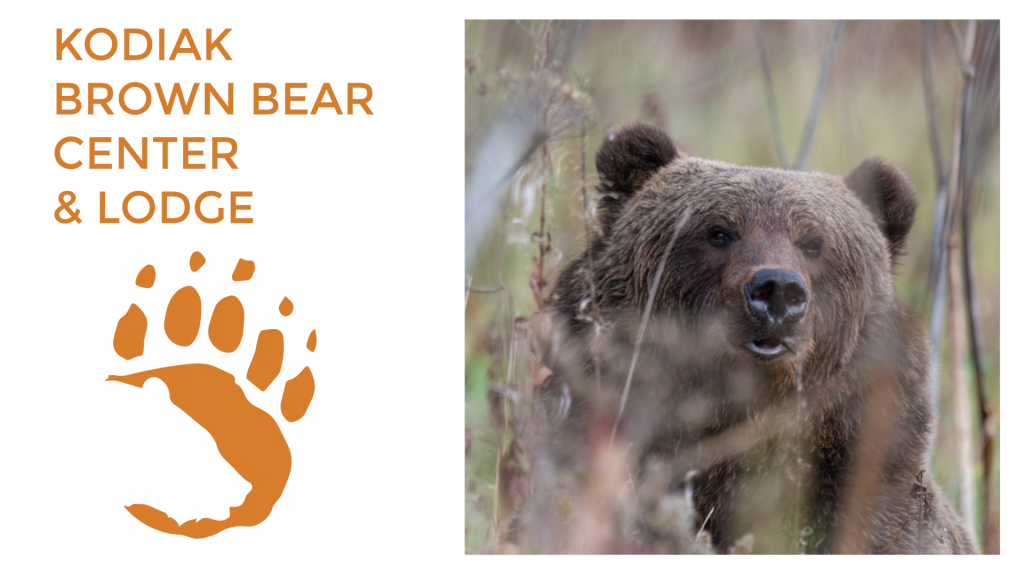
A Kodiak brown bear stands among tall grasses. On the left, orange text reads “KODIAK BROWN BEAR CENTER LODGE” above a bear paw print graphic.

When the Kodiak Archipelago tips into late October, the bears that have spent the summer fishing salmon in our streams and grazing on hillsides begin a quiet retreat. Within a few short weeks, most of Kodiak’s roughly 3,500 brown bears will disappear from the landscape entirely, vanishing into dens carved high above the valleys they roam in summer. What happens inside those dens — and the careful choices each bear makes about where to sleep — is one of the most remarkable chapters in the Kodiak bear’s life cycle.

This post takes a closer look at den biology, the types of dens Kodiak bears build, the deliberate way they pick their sites, and how their denning habits set them apart from other brown bears around the world.

A Slowed-Down Body, Not a Sleeping One

Kodiak bear hibernation isn’t quite the deep, mouse-like torpor most people imagine. Biologists often call it “carnivore lethargy” or use the more accurate term denning. A denning Kodiak bear drops its heart rate from a summer resting average of around 50 beats per minute down to as low as 8–12 beats per minute. Body temperature falls only modestly — by perhaps 4–7°F — which keeps the bear capable of waking quickly if disturbed.

What makes the Kodiak’s hibernation extraordinary is what doesn’t happen. Despite going without food, water, urination, or defecation for up to six months, a bear emerges from the den with its bone density essentially intact and its muscle mass largely preserved. They achieve this by recycling urea — the waste product that would normally be excreted as urine — back into useful amino acids and protein. It’s a metabolic trick medical researchers have studied for decades, hoping to apply it to human conditions like osteoporosis and kidney disease.

Pregnant sows take this further still. In the deep cold of January or February, a denning female will give birth to one to four cubs, each weighing less than a pound. She’ll nurse them in total darkness for two to three months while still in a hibernating state, mobilising her own fat reserves to produce milk that’s roughly a third fat by composition.

Limited to 8 Guests

Your Private Alaskan Wilderness Retreat Awaits

Stay in private cabins on Karluk Lake — home to the highest concentration of Kodiak brown bears. All-inclusive packages from $5,600 pp.

View Packages → or call +1 877-335-2327

The Dens Themselves

Kodiak bears build several distinct types of dens, and the choice often reflects what the surrounding terrain has to offer.

The most common is the excavated earth den — a tunnel and chamber the bear digs itself, usually into a steep, well-drained slope. A typical Kodiak den has a short entry tunnel of three to six feet leading to a sleeping chamber just large enough to curl up in. Bears line the chamber with dried grasses, alder branches, and moss they tear up nearby, forming an insulating mat that keeps them off the cold ground. Excavation is genuinely hard work; a sow with cubs may move a tonne or more of soil and rock before she’s satisfied.

Where the geology cooperates, bears will use rock cavity dens — natural crevices, talus pockets, or shallow caves they enlarge slightly. These tend to be more durable than earth dens and are sometimes reused across decades, occasionally by different bears.

A smaller share build root-mass dens beneath the upturned root plates of large fallen trees, taking advantage of the natural cavity beneath. And in years with deep, stable snowpack, you’ll occasionally see snow dens, especially at higher elevations or among adolescent bears who haven’t yet established a denning routine.

Most Kodiak bears dig a fresh den each year. Site fidelity exists, but it’s the general area a bear returns to — not the specific den itself.

Dan M Lee - Karluk Lake

Choosing the Right Slope

Den site selection is one of the most studied behaviours in Kodiak bear biology, and the patterns are surprisingly consistent. Three variables matter most: slope, elevation, and aspect.

Slope is the strongest predictor. Kodiak bears overwhelmingly choose steep terrain — typically between 30 and 45 degrees — for the simple reason that steep ground sheds water. A flat or gently sloping den floods during the spring melt; a steep one stays dry. Steep slopes also accumulate the deep, insulating snowpack that effectively turns a den into a sealed, well-insulated chamber for the winter.

Elevation tends to fall between 1,000 and 2,500 feet on Kodiak Island, with most dens clustered in the 1,500–2,000 foot band. This is the sweet spot where snow cover is reliable, human disturbance is minimal, and the surrounding alpine and subalpine vegetation provides quick post-emergence food. Lower-elevation dens exist, particularly on the wetter southern parts of the archipelago, but they’re the exception.

Aspect — the compass direction a slope faces — is the subtlest factor. North-facing slopes are favoured on Kodiak, which initially seems counterintuitive: surely a sun-facing slope would be warmer? The answer lies in snow stability. North-facing slopes hold their snow longer and more consistently through the winter, providing the steady insulation that matters more than direct warmth. They’re also less prone to mid-winter thaw events that can flood a den or cause a bear to emerge too early.

Many bears also choose sites with vegetation cover above the den entrance — alder, salmonberry, or stunted spruce — which both stabilises the soil and provides additional snow capture.

Why Kodiak Denning Looks Different

Kodiak bears are a distinct subspecies (Ursus arctos middendorffi), genetically isolated from mainland brown bears for roughly 12,000 years, and their denning habits show some clear differences from their cousins.

Compared to interior Alaskan grizzlies, Kodiak bears den at lower elevations and for slightly shorter periods. An interior grizzly may den for seven months in a high alpine site at 4,000 feet or above; a Kodiak male may den for as little as four to five months and rarely above 2,500 feet. The maritime climate of the archipelago — milder winters, deeper but wetter snow, and abundant late-season food in the form of intertidal carrion and lingering salmon — allows for a shorter dormancy.

Coastal mainland brown bears, like those along the Katmai coast, share many similarities with Kodiaks but tend to use rock cavity dens at a lower rate, simply because the volcanic geology of the Alaska Peninsula offers fewer of them. European brown bears and Russian Kamchatka bears, meanwhile, often den communally or in shared cave systems — behaviour virtually never seen on Kodiak, where dens are strictly solitary outside of mothers with cubs.

Perhaps the most striking difference is timing. Adult male Kodiak bears, particularly large boars in good condition, sometimes don’t den at all in mild years, remaining active throughout the winter feeding on deer, intertidal life, and overwintered berries. This is rare in interior populations, where winter conditions simply don’t allow it.

A Window Into Kodiak

Understanding where and how Kodiak bears den isn’t just academically interesting — it’s central to managing the population responsibly. Den disturbance during winter is one of the most significant stressors a bear can face, and it’s why the Kodiak Brown Bear Center and our partners advocate for careful season closures and respectful viewing distances during emergence in late spring.

The next time you watch a Kodiak bear lumber along a salmon stream in July, it’s worth remembering that just three months earlier, that same animal was curled in near-total darkness on a steep mountainside, breathing perhaps four times a minute. The summer giant and the silent winter sleeper are the same bear — and the den is what makes both possible.

bear viewing and fly fishing in Alaska

Ready for an adventure?

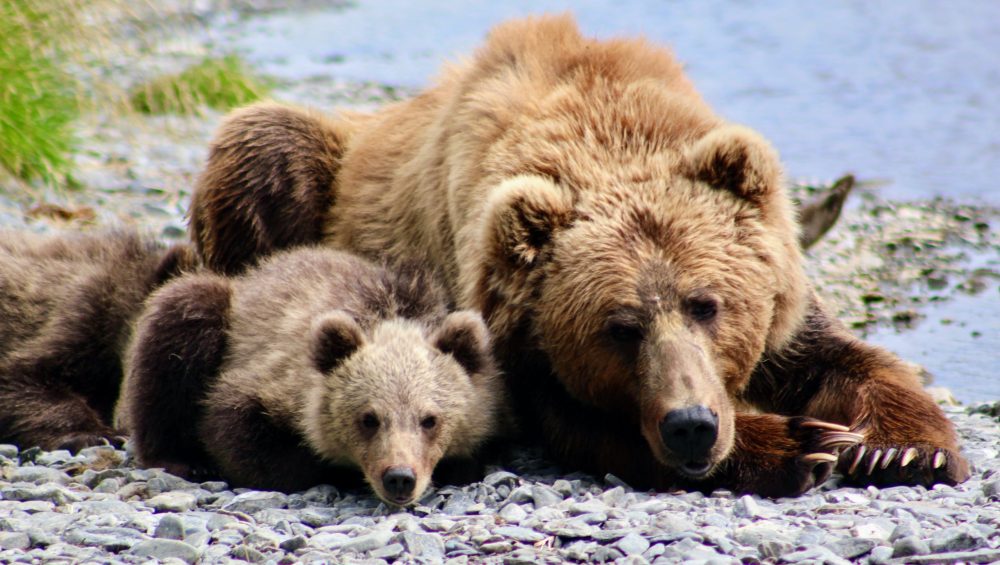
Sow Female Bear With Young

Spring “Walking Hibernation”

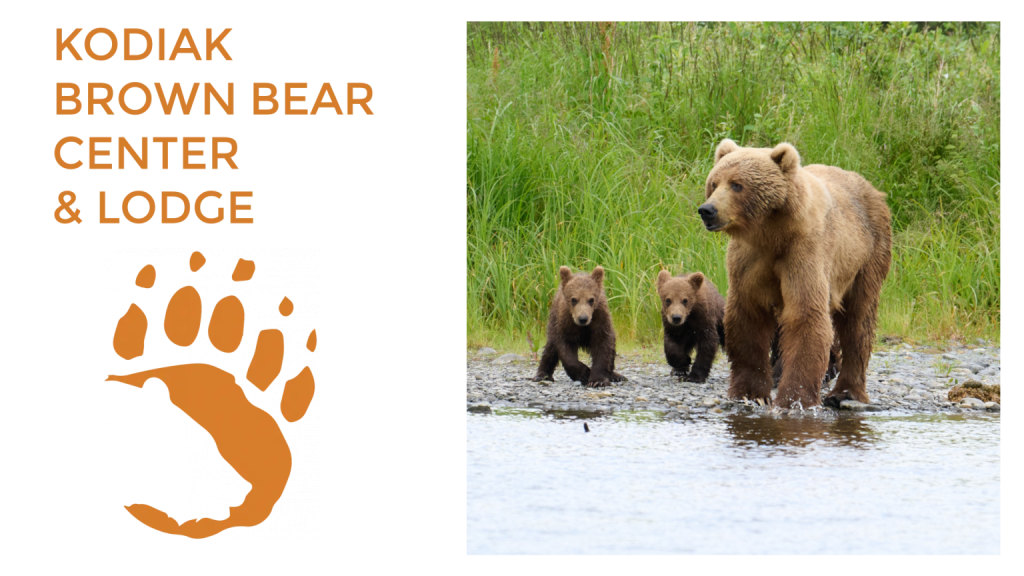
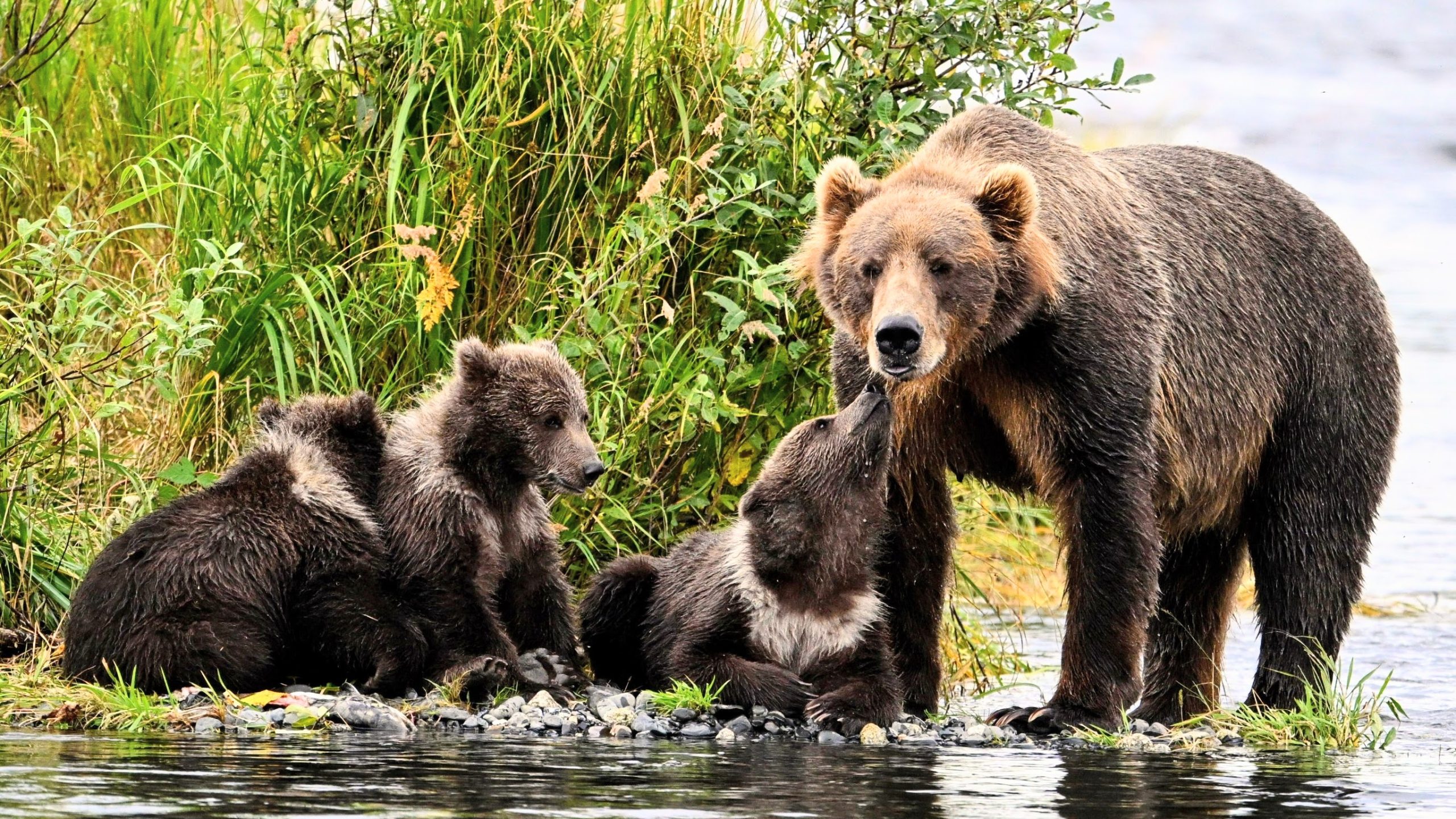
A Kodiak brown bear with two cubs walks along a riverbank with green grass behind them. On the left, orange text reads Kodiak Brown Bear Center Lodge above a bear paw print.

When Kodiak brown bears emerge from their dens after winter hibernation, they don’t immediately return to full activity. Instead, they go through a transitional phase and specific behavioral patterns dictated by their physiology and the available food sources on the archipelago.

Here is what generally happens during that early spring period

Waking Up: "Walking Hibernation"

Bears do not wake up with fully restored metabolic functions. For the first two to three weeks after emerging (usually in April for males and May for females with cubs), they enter a state often called walking hibernation.

Metabolism: Their metabolism remains lower than normal. They may eat very little and drink less water than usual during this time.

Lethargy: They are often lethargic and spend a significant amount of time sleeping or resting near the den site before moving to lower elevations.

Once they become more active, they descend from their mountain dens (often located at 1,000–3,000 feet) to the valleys and coastlines. The snow melts earlier at lower elevations, making movement easier and exposing the first food sources.

mama-bear-sow-and-cubs-young-dan-m-lee
Dan M Lee - Late Spring Cubs
KBBC

Where the Bears Roam Free

Private cabins • All-inclusive meals • Float plane access • Sauna

Check Availability

Early Spring Diet (Scavenging and Grazing)

Since the salmon runs—the staple of the Kodiak bear’s diet—haven’t started yet, bears must rely on what is available. This is often the leanest time of year for them.

Beach Combing: They head to the beaches to scavenge for marine debris, washed-up carcasses (whales, seals, or sea lions), and invertebrates like clams or crabs during low tide.

Vegetation: They graze on early spring vegetation. This includes sedges, grasses, horsetail, and skunk cabbage. These plants are high in protein during their early growth stages and help restart the bear’s digestive system.

Winter-Kills: They will opportunistically feed on deer or elk that did not survive the winter.

Mating Season Preparation

By late May and into June, the focus begins to shift toward mating.

Social Dynamics: Adult males (boars) begin to roam widely in search of females (sows). This is one of the few times outside of salmon fishing where large numbers of bears may interact, though often aggressively.

Mother and Cubs: Sows with new cubs (cubs-of-the-year) are extremely cautious during this time to avoid aggressive males, often sticking to more rugged terrain or specific safe zones.

bear viewing and fly fishing in Alaska

Ready for an adventure?

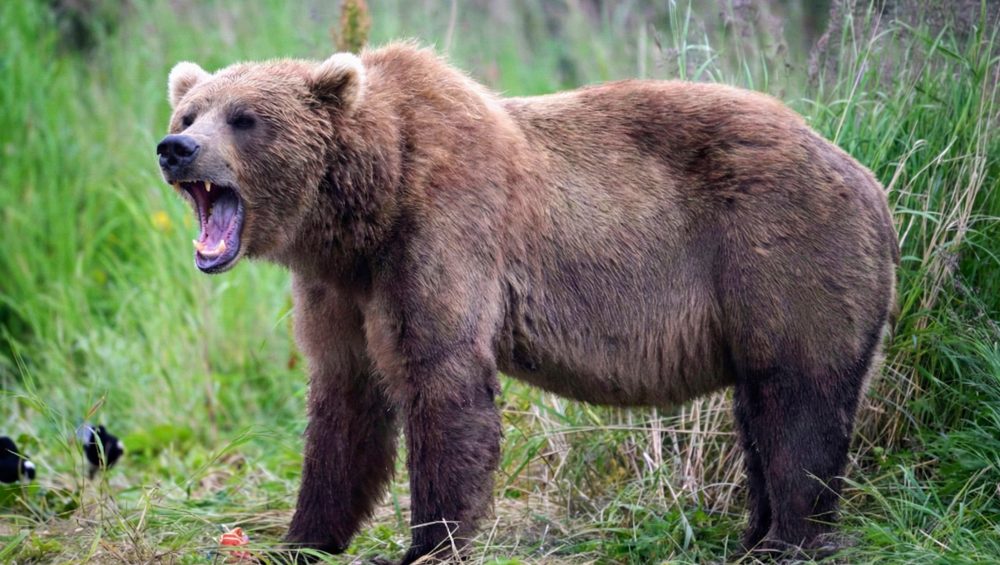
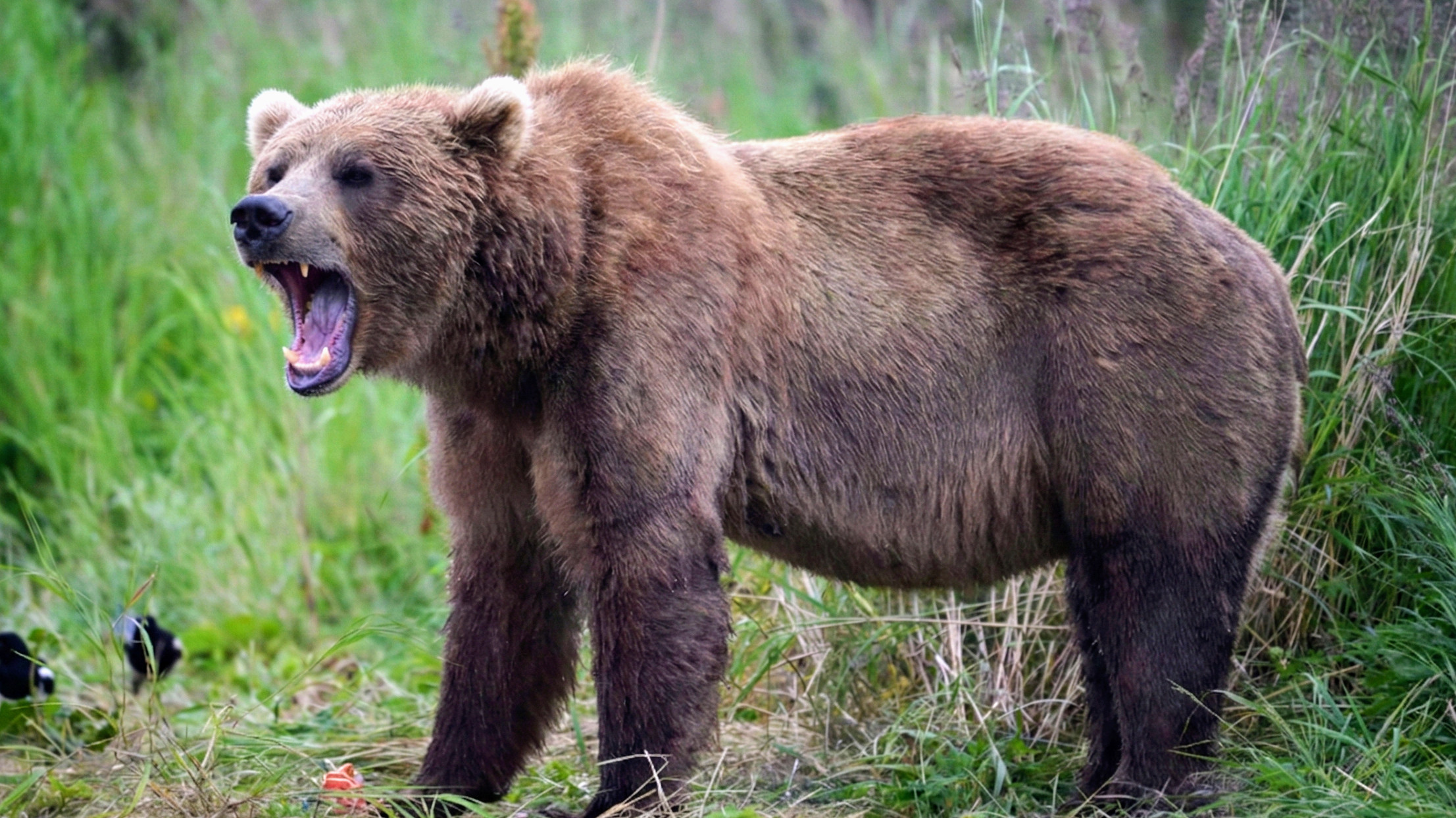
A large brown bear stands in tall grass with its mouth open wide, showing its teeth as if growling or roaring. Lush green vegetation surrounds the bear in a natural outdoor setting.

A Guide to Decoding the Silent Language of Kodiak’s Giants

A Kodiak brown bear stands in a grassy stream on the right. On the left, orange text reads “Kodiak Brown Bear Center Lodge” above a bear paw print logo.

When most people imagine a bear communication, Hollywood fills their mind with thunderous roars and gnashing teeth. But here on Kodiak Island, the reality is far more subtle—and arguably more fascinating.

As wildlife enthusiasts (and I a wildlife photographer), we often spend hours observing Kodiak brown bears on the Karluk River and surrounding inlets. The key to a truly safe and enriching experience isn’t just seeing the bear; it’s understanding what the bear is saying.

Kodiak brown bears are masters of non-verbal communication, using a complex vocabulary of postures, ear positions, and subtle movements to navigate their social hierarchy without unnecessary conflict.

If you are preparing for your trip to the Kodiak Brown Bear Center, here is a guide to deciphering the silent language of the giants.

All Ears

One of the quickest ways to gauge a bear’s mood is to look at its ears.

Perked Forward: A bear with ears pricked forward is curious and engaged. They are gathering information about a sound or a scent. This is generally a calm, attentive state.

Pinned Back: This is a universal sign of stress or aggression in the animal kingdom, and bears are no exception. Ears flattened against the skull indicate the bear is feeling defensive, agitated, or threatened. If you see this through your lens, it’s time to slowly back off and give them space.

5 myths about bears-busted
Dan M Lee - Ears Forward, Engaged

The "Stress Yawn"

In the human world, a yawn means we are tired or bored (well the most supported theory is that yawning helps cool the brain, anyway I digress). In the bear world, a yawn in the middle of a social interaction often means the opposite: high tension.

We often see this when a sub-adult bear finds themselves too close to a dominant boar. The younger bear might sit down and let out a wide, exaggerated yawn. They aren’t sleepy; they are venting anxiety. It’s a displacement behavior that essentially signals, “I am uncomfortable with this situation, and I’m trying to calm down.”

That’s not to say bears do not yawn when they are tired, as they do, just like humans.

The Cowboy Walk

My favorite behavior to observe, but it could mean trouble.

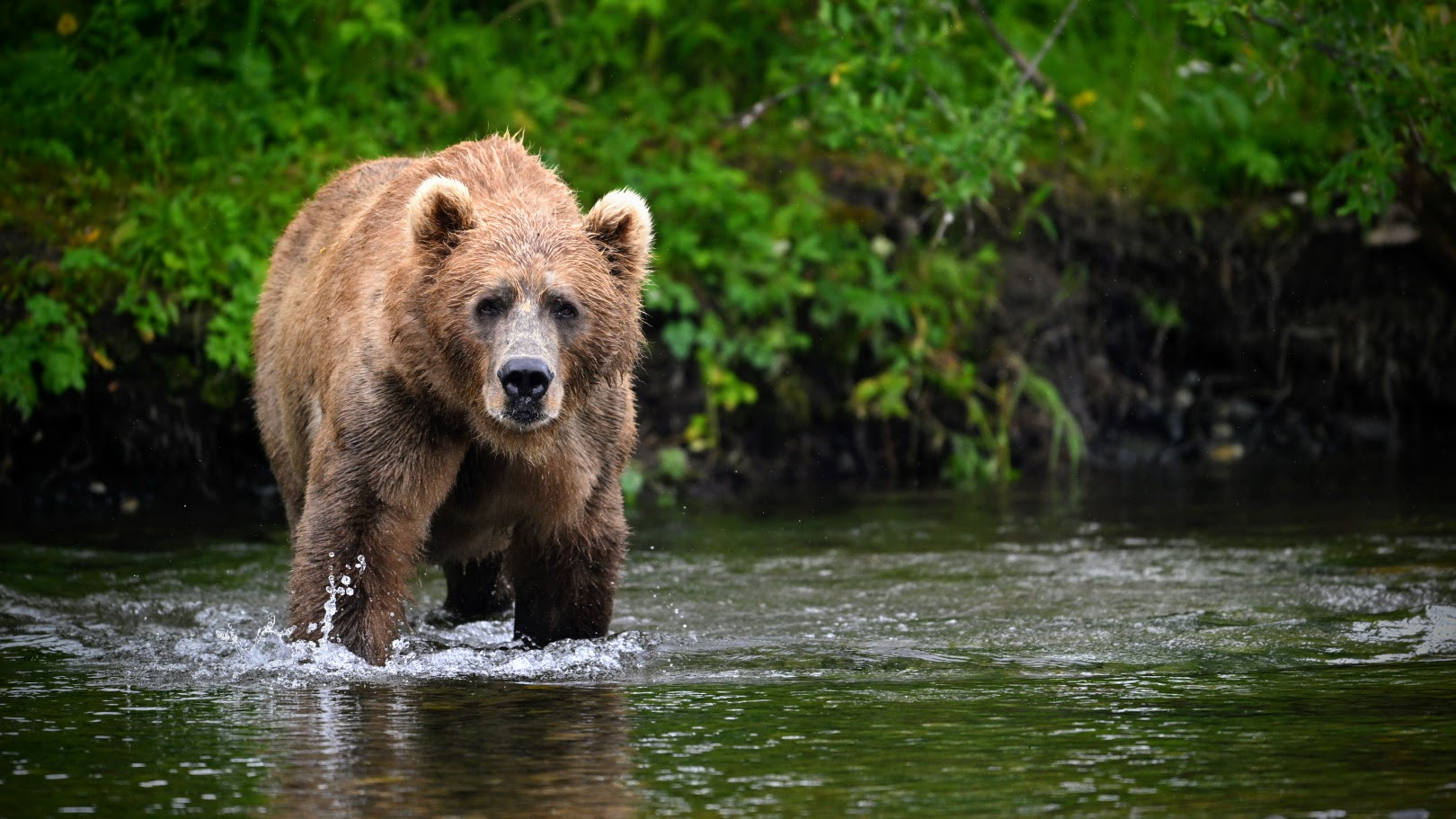
If you see a large male walking with a stiff-legged, rolling gait—legs spread slightly wider than usual—you are witnessing a display of dominance.

We often call this the “cowboy walk.” By stiffening their legs and moving deliberately, the bear is maximizing its height and presence, signaling to other bears (and us) that he is the boss of this stretch of river.

A photographer captures this perfectly from the Kodiak bears cousin, the Coastal brown bear, which exhibit the same behavior traits

KBBC
Experience World-Class Bear Viewing
All-inclusive stays from 4 to 8 days on Kodiak Island, Alaska
Check Availability
A large brown bear stands in tall grass with its mouth open wide, showing its teeth as if growling or roaring. Lush green vegetation surrounds the bear in a natural outdoor setting.
Dan M Lee - Yawning Kodiak bear

Jaw Popping and Huffing

While bears are generally quiet, they do have a specific sound for “back off.” If a bear is surprised or feels crowded, it may expel air rapidly in a “huff” or snap its jaws together to create a loud popping sound.

This isn’t usually a prelude to an attack, but rather a clear warning. It is the bear’s way of saying, “You are in my personal space, and I don’t like it.” Our guides are experts at listening for these cues to ensure we maintain a respectful distance that keeps the bears relaxed.

Avoidance is Key

Perhaps the most common “interaction” you will see is avoidance. Kodiak bears are generally conflict-averse.

You will often watch a sow with cubs spot a large male 200 yards away and immediately alter her path to circle wide around him.

This isn’t fear so much as a calculated survival strategy. Understanding these subtle diversions helps us predict where a bear might move next, allowing us to remain safe at all times.

Learning to “speak bear” transforms a viewing trip. You stop seeing just a “big animal” and start seeing a sentient creature with moods, boundaries, and intentions.

It reminds us that we are guests in their home. By listening to their silent language, we show them the respect they deserve—and in return, they grant us a glimpse into their wild, unguarded world.

bear viewing and fly fishing in Alaska

Ready for an adventure?

sockeye Salmon in an Alaskan river

Why Salmon are the Lifeblood of Kodiak Island

A graphic for Kodiak Brown Bear Center Lodge features a brown bear paw print and text on the left, with a photo of a red-hued salmon swimming underwater on the right.

On Kodiak Island, every stream, river, and lake pulses with an ancient rhythm. It’s the rhythm of salmon. Each year, a silver tide of five different species of Pacific salmon returns from the ocean to the freshwater streams of their birth. This epic journey, culminating in the ultimate sacrifice, is more than just a spectacle; it is the foundational event that fuels nearly all life on the Emerald Isle, earning salmon the title of Kodiak’s true lifeblood.

The Great Annual Feast

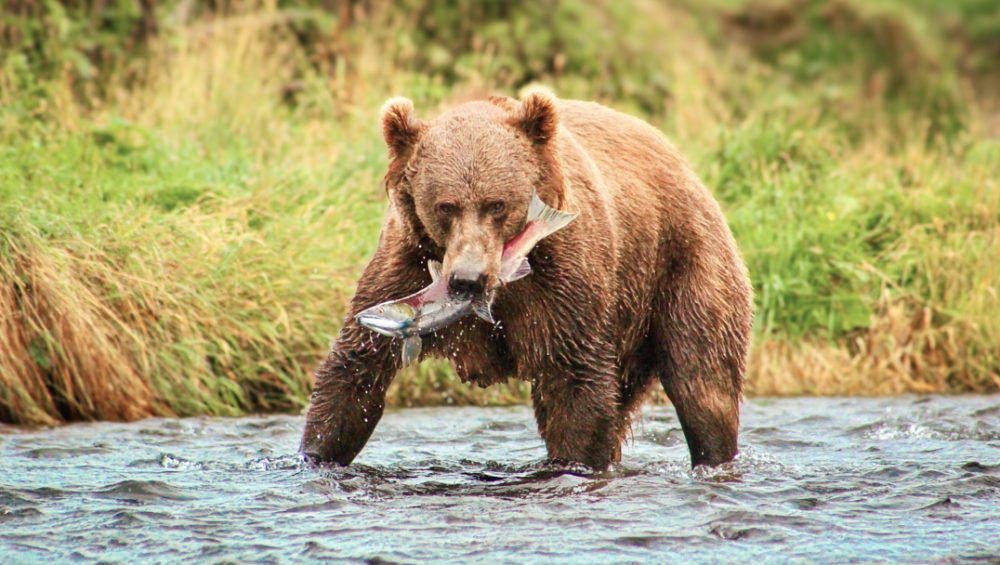
The most visible impact of this migration is the frenzied feast it provides. As summer wanes, Kodiak brown bears congregate along the rivers, expertly hunting the nutrient-rich fish. The high-fat content of salmon is the critical fuel they need to build reserves for the long winter hibernation. But the bears are not alone.

Bald eagles, gulls, and river otters join the banquet, relying on this seasonal bounty for their own survival and to raise their young.

This explosion of life, centered on the returning salmon, is one of the most powerful and dramatic scenes in the natural world.

sockeye Salmon in an Alaskan river
KBBC
Experience World-Class Bear Viewing
All-inclusive stays from 4 to 8 days on Kodiak Island, Alaska
Check Availability

Fertilizing the Forest

However, the salmon’s most profound gift is one that is largely unseen. As a keystone species, their influence extends deep into the forest itself. Salmon spend years in the ocean, accumulating nutrients from the sea. When they return to Kodiak and die after spawning, they bring a massive influx of marine-derived nitrogen and phosphorus with them. This is where the bears play an unexpected role as nature’s gardeners. By dragging salmon carcasses from the riverbanks deep into the woods, they directly fertilize the soil.

Scientific studies have traced this marine nitrogen from the salmon into the foliage of the Sitka spruce, alders, and shrubs lining the streams, making the land more lush and productive.

An Interconnected Ecosystem

From the fattened bears and soaring eagles to the enriched soil and thriving forests, the entire ecosystem is woven together by the life cycle of the salmon. They are the irreplaceable link between the vast, nutrient-rich ocean and the terrestrial world of the island.

This annual migration is not just a food source; it is a massive transfer of energy that underpins the health, vibrancy, and wild spirit of Kodiak Island, Alaska.

It is nature’s perfect, powerful cycle, and it is the beating heart of the island.

bear viewing and fly fishing in Alaska

Ready for an adventure?