When most people imagine a bear communication, Hollywood fills their mind with thunderous roars and gnashing teeth. But here on Kodiak Island, the reality is far more subtle—and arguably more fascinating.
As wildlife enthusiasts (and I a wildlife photographer), we often spend hours observing Kodiak brown bears on the Karluk River and surrounding inlets. The key to a truly safe and enriching experience isn’t just seeing the bear; it’s understanding what the bear is saying.
Kodiak brown bears are masters of non-verbal communication, using a complex vocabulary of postures, ear positions, and subtle movements to navigate their social hierarchy without unnecessary conflict.
If you are preparing for your trip to the Kodiak Brown Bear Center, here is a guide to deciphering the silent language of the giants.
All Ears
One of the quickest ways to gauge a bear’s mood is to look at its ears.
Perked Forward: A bear with ears pricked forward is curious and engaged. They are gathering information about a sound or a scent. This is generally a calm, attentive state.
Pinned Back: This is a universal sign of stress or aggression in the animal kingdom, and bears are no exception. Ears flattened against the skull indicate the bear is feeling defensive, agitated, or threatened. If you see this through your lens, it’s time to slowly back off and give them space.
The "Stress Yawn"
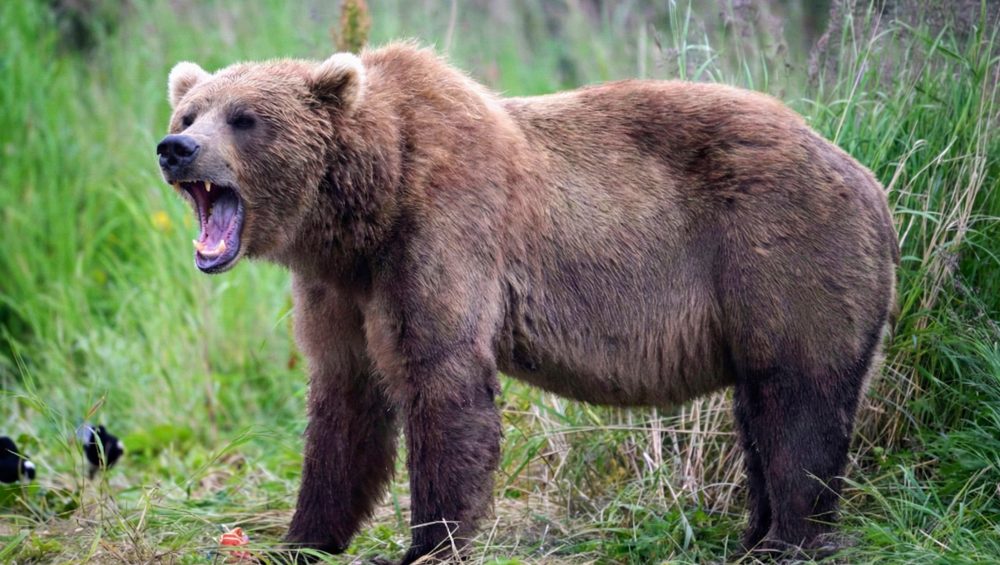
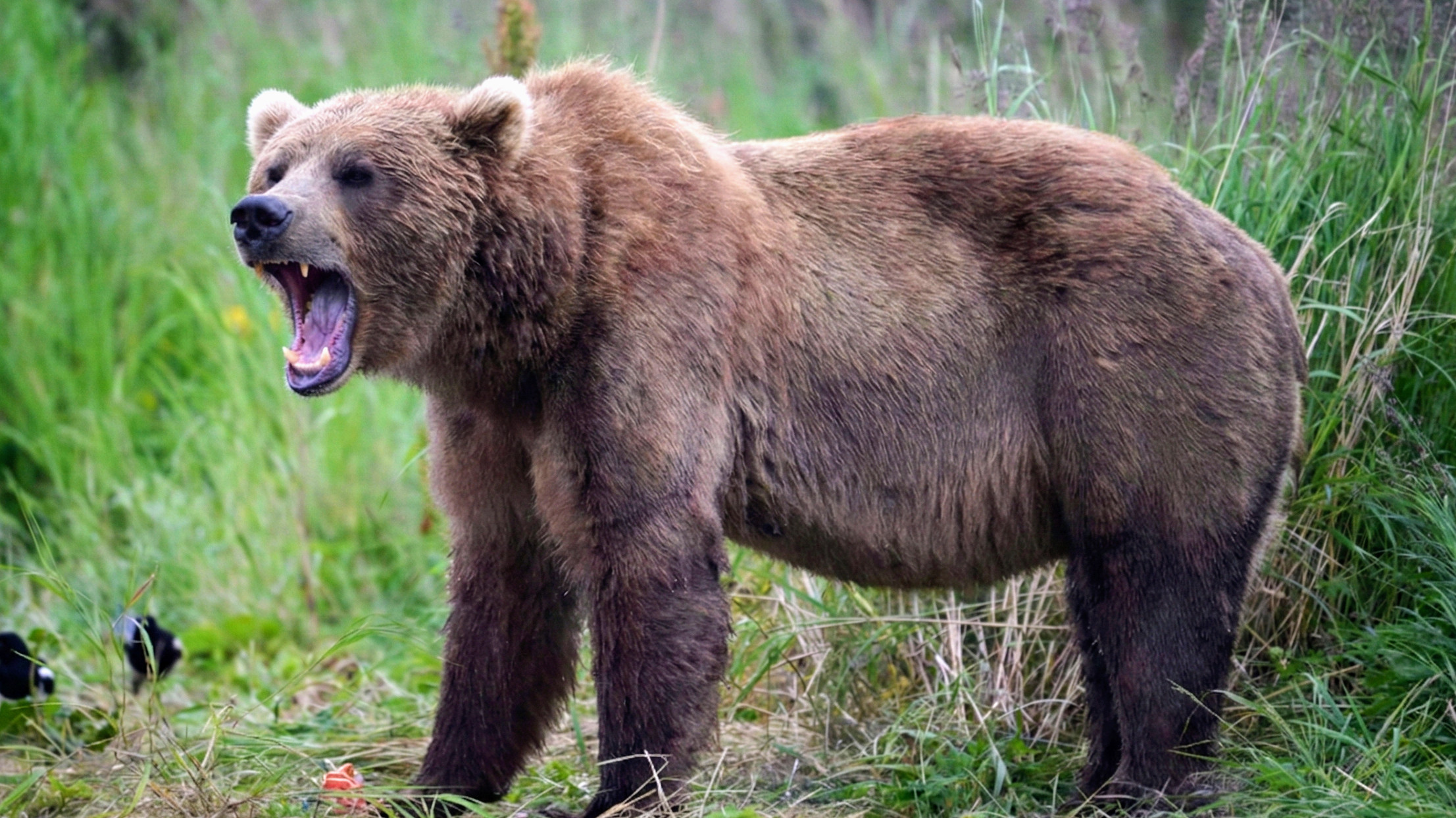
In the human world, a yawn means we are tired or bored (well the most supported theory is that yawning helps cool the brain, anyway I digress). In the bear world, a yawn in the middle of a social interaction often means the opposite: high tension.
We often see this when a sub-adult bear finds themselves too close to a dominant boar. The younger bear might sit down and let out a wide, exaggerated yawn. They aren’t sleepy; they are venting anxiety. It’s a displacement behavior that essentially signals, “I am uncomfortable with this situation, and I’m trying to calm down.”
That’s not to say bears do not yawn when they are tired, as they do, just like humans.
The Cowboy Walk
My favorite behavior to observe, but it could mean trouble.
If you see a large male walking with a stiff-legged, rolling gait—legs spread slightly wider than usual—you are witnessing a display of dominance.
We often call this the “cowboy walk.” By stiffening their legs and moving deliberately, the bear is maximizing its height and presence, signaling to other bears (and us) that he is the boss of this stretch of river.
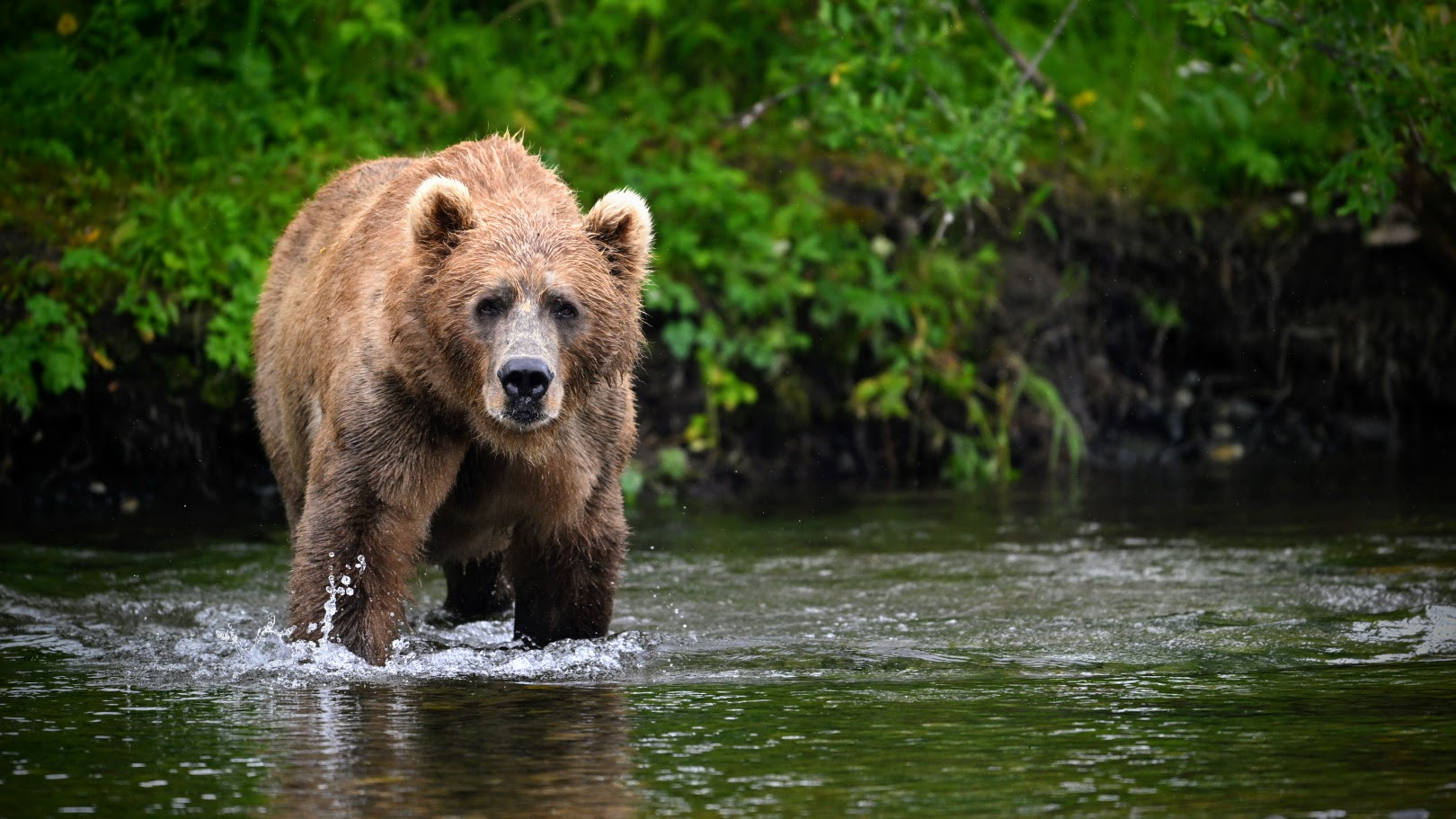
A photographer captures this perfectly from the Kodiak bears cousin, the Coastal brown bear, which exhibit the same behavior traits
Jaw Popping and Huffing
While bears are generally quiet, they do have a specific sound for “back off.” If a bear is surprised or feels crowded, it may expel air rapidly in a “huff” or snap its jaws together to create a loud popping sound.
This isn’t usually a prelude to an attack, but rather a clear warning. It is the bear’s way of saying, “You are in my personal space, and I don’t like it.” Our guides are experts at listening for these cues to ensure we maintain a respectful distance that keeps the bears relaxed.
Avoidance is Key
Perhaps the most common “interaction” you will see is avoidance. Kodiak bears are generally conflict-averse.
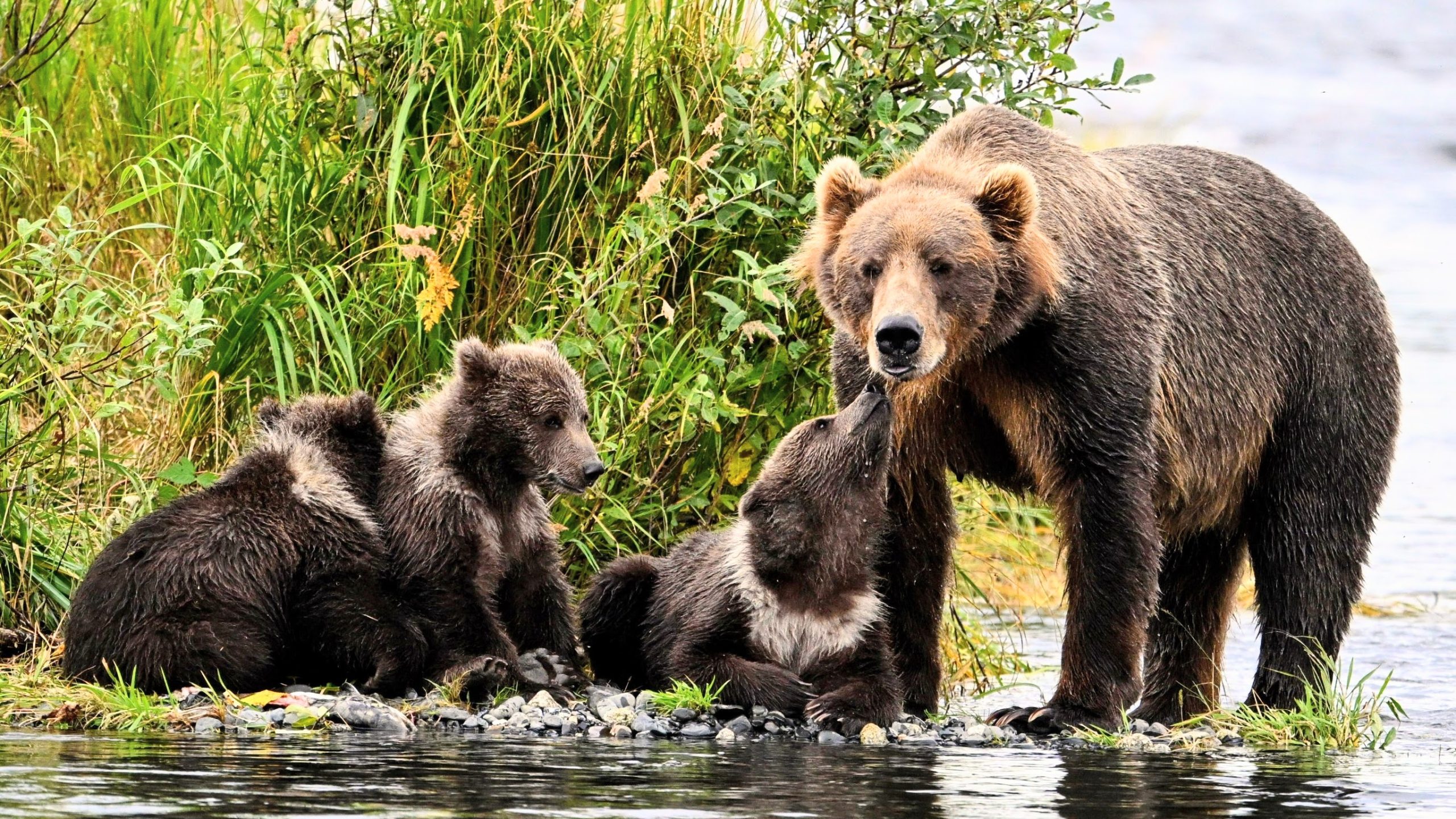
You will often watch a sow with cubs spot a large male 200 yards away and immediately alter her path to circle wide around him.
This isn’t fear so much as a calculated survival strategy. Understanding these subtle diversions helps us predict where a bear might move next, allowing us to remain safe at all times.
Learning to “speak bear” transforms a viewing trip. You stop seeing just a “big animal” and start seeing a sentient creature with moods, boundaries, and intentions.
It reminds us that we are guests in their home. By listening to their silent language, we show them the respect they deserve—and in return, they grant us a glimpse into their wild, unguarded world.

Content Author & Alaska Photographer
I lead photography workshops at the Kodiak Brown Bear Center and create engaging, high-quality content for blogs and websites across Alaska and beyond. My deep passion for wildlife—especially Kodiak bears—continually inspires my work and fuels my storytelling.