Kodiak brown bears in the wild at kodiak brown bear center

Kodiak Island Weather by Season: What to Expect

A person in a rain jacket stands outdoors next to text reading Kodiak Brown Bear Center Lodge with an orange bear paw print graphic.

Kodiak Island sits at the meeting point of the Gulf of Alaska and the North Pacific, and the weather here is shaped almost entirely by the sea. That means cool, damp, and changeable — often all in the same afternoon. Locals like to say Kodiak has four seasons in a single day, and they’re not exaggerating. For visitors planning a bear-viewing trip, understanding the rhythm of those seasons is the difference between a good experience and a great one, because the weather doesn’t just affect what you wear — it shapes what the bears are doing.

Spring (March–May): Emergence and Cold Rain

Spring on Kodiak is a slow, wet thaw rather than a sudden bloom. Temperatures climb from the high 20s°F in March into the mid-40s°F by May. Snow lingers on higher slopes well into May, and rain — sometimes mixed with sleet — is the dominant feature at lower elevations. Wind off the Gulf can be biting.

This is when bears emerge from their dens, lean and hungry. Sows with new cubs come down last, often not until mid-May, while large boars are out and moving by April. Sightings are still relatively scarce in early spring, but late-season visitors get a glimpse of bears at their most subdued — grazing on early sedges, scraping winter-killed deer, slowly rebuilding condition before the salmon arrive. Pack waterproofs, layers, and expect mud.

KBBC
Experience World-Class Bear Viewing
All-inclusive stays from 4 to 8 days on Kodiak Island, Alaska
Check Availability

Summer (June–August): The Salmon Window

Summer is Kodiak’s gentlest weather and its peak bear-viewing season. June averages in the mid-50s°F, July and August in the high 50s to low 60s°F. Long daylight hours — up to 18 hours in late June — mean extended viewing windows. Rain is still frequent but lighter and warmer, and stretches of clear weather are common, especially in mid-July.

This is when the salmon return, and Kodiak’s bears come to the streams in numbers. Sockeye runs typically peak in early to mid-July at our viewing locations, with bears fishing from dawn through late evening. The combination of mild weather, long light, and concentrated bear activity makes summer the most reliable time for an exceptional experience. Pack lighter waterproofs, fleece layers, and good rubber boots — the ground is always wet, even when the sky is clear.

Autumn (September–November): Big Bears, Big Weather

Autumn arrives quickly. September is cool and often wet, with temperatures sliding from the mid-50s°F into the 40s°F by month’s end. October brings the first real storms off the Aleutians, with wind, heavy rain, and shorter days. By November, snow returns to the higher elevations and most bears begin moving toward their denning sites.

But early autumn — particularly mid-September through mid-October — is one of the most rewarding times to visit. Bears are at their heaviest weight of the year, gorging on late silver salmon, berries, and remaining sockeye carcasses. The famous Kodiak boars look enormous at this time of year. Hillsides turn gold and red. The trade-off is genuine weather — expect rain on most days and the occasional gale. Visitors who come prepared are rewarded with bears in peak condition and dramatic, moody light that photographers travel a long way for.

Bear In the water fishing
Dan M Lee - Autumn Bears

The One Constant

Whatever month you visit, two things stay true on Kodiak: the weather will change, and the right gear matters more than the forecast. Quality waterproofs, warm layers, and tall rubber boots will carry you through any season. Bears, after all, don’t take rain days — and the best moments often come right after the worst weather.

Planning a trip? Get in touch with the Kodiak Brown Bear Center for season-by-season guidance and small-group viewing programs tailored to the time of year you visit.

bear viewing and fly fishing in Alaska

Ready for an adventure?

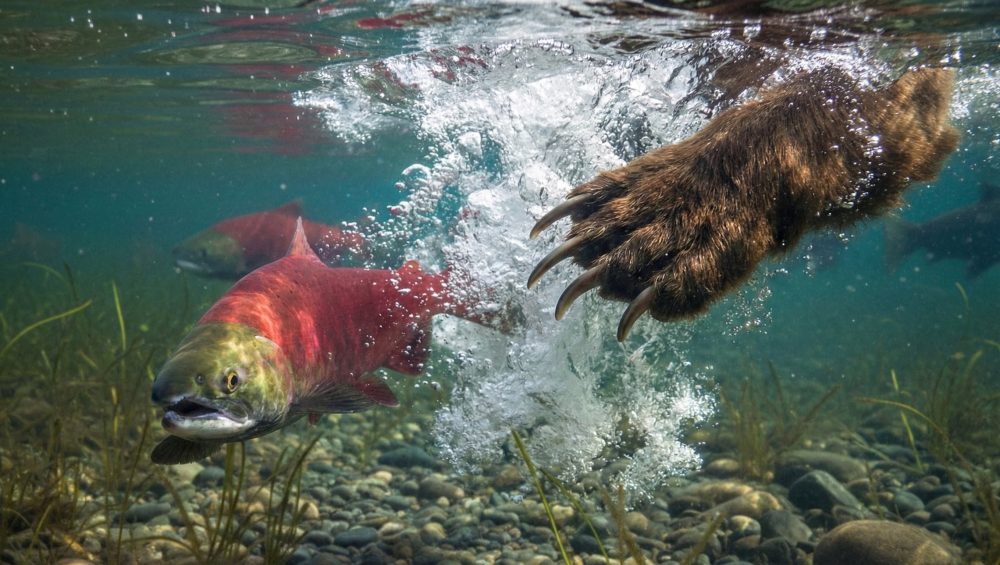
A bear’s paw splashes underwater as it attempts to catch a red salmon swimming among rocks and aquatic plants in a clear river.

The Shift to the Salmon Stream

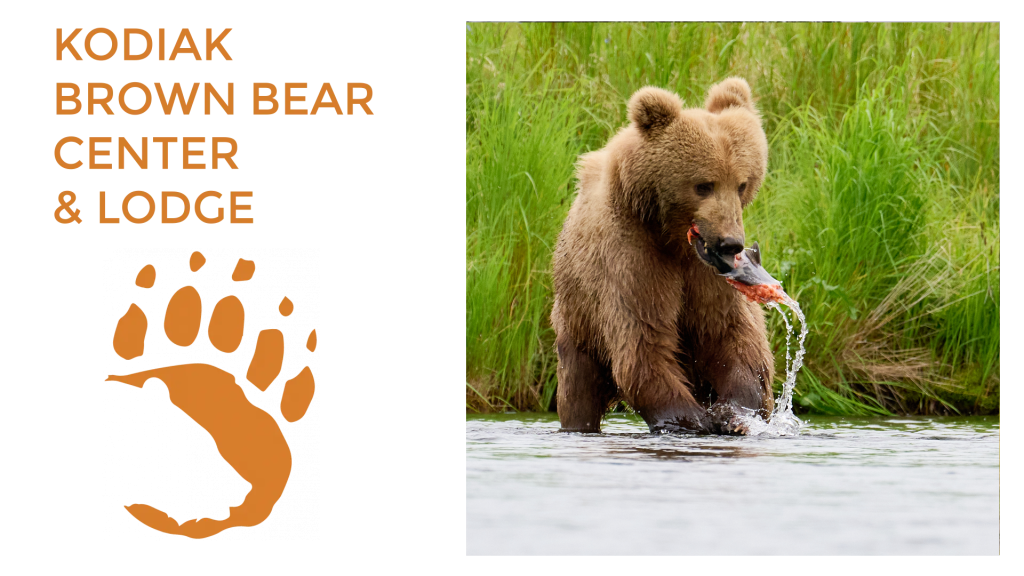
A brown bear stands in a river, catching a fish in its mouth. On the left, orange text reads Kodiak Brown Bear Center Lodge above a bear paw print graphic. Green grass is visible in the background.

By early summer, the grazing phase ends abruptly with the arrival of the salmon. This metabolic switch—from a low-calorie vegetarian diet to high-fat protein—triggers the most active and photographically dynamic period of the bear’s year. 

Let’s explore the Kodiak brown bears love for fish during the season. 

Sockeye Time

The first major event is the Red Salmon, or Sockeye, run, occurring from mid-June to mid-July.

Because Sockeye are energetic and fast, bears often have to work harder to catch them, leading to more “chasing” behaviors where bears sprint through shallow water or plunge from banks.

This is often the best time for action shots; while the bears are still shedding their winter coats and may look a bit shaggy, the backdrop is usually a vibrant, lush green.

KBBC
Experience World-Class Bear Viewing
All-inclusive stays from 4 to 8 days on Kodiak Island, Alaska
Check Availability

Pink

As the season progresses into late July and August, the Pink Salmon (Humpbacks) arrive in staggering numbers.

This abundance changes the bears’ behavior from frantic hunting to selective feasting, often referred to as “high-grading.” Bears will catch a fish and eat only the high-fat skin and brains, discarding the rest to put on massive weight quickly.

Around August 1st, specifically in systems like the Karluk River, the dynamic shifts again as the sheer biomass of fish draws the large, dominant boars out of the dense brush, making early August the prime window to capture the largest bears on the island.

A brown bear stands in a river with water splashing around its legs, holding a large fish in its mouth. The bear’s fur is wet and the background is blurry, showing more water and greenery. Taken by Dan M Lee
Dan M Lee - Easy Catch

Silver Coho

Finally, as the season cools from late August through September, the Silver Salmon (Coho) arrive.

These are larger, stronger fish, and by now the bears are heavy, round, and fully prepared for the coming winter. The frantic energy of June is replaced by a methodical, heavy plod as bears at their maximum weight move with a slow, powerful purpose, their coats fully restored and glossy.

The aesthetic changes dramatically here as well, with lush greens fading to gold and rust, offering a moody, autumnal palette that contrasts beautifully with the dark fur of the bears.

Time for Hibernation Again

As the Coho run dwindles and the first heavy snows dust the higher elevations in late October and November, the bears’ metabolic clock begins to wind down once more.

The frenetic energy of the fishing season is replaced by a profound lethargy, a biological signal that their bodies are ready for the long sleep.

Having secured the necessary fat reserves to survive the harsh Alaskan winter, they leave the river valleys and ascend back to the steep, snow-covered slopes.

There, they will excavate or re-enter their dens, completing the annual cycle and vanishing into the white landscape until the spring thaw calls them forth again.

bear viewing and fly fishing in Alaska

Ready for an adventure?

Camp Island Alaska

Camp Island, Karluk Lake: A Journey Through Kodiak’s Past

Black and white photo of a smiling young woman wearing traditional attire and headband with beads. On the left, text reads, Kodiak Brown Bear Center Lodge next to an orange bear paw print graphic.

Kodiak Island, Alaska’s “Emerald Isle,” is a land of rugged beauty and deep history. Within this expansive archipelago lies Camp Island, a distinct island in the middle of Karluk Lake on Kodiak’s southwest side.

This specific island, not other general “camps” on Kodiak, holds a unique historical narrative, from ancient indigenous life to modern conservation efforts.

A Place of Ancient Roots: Alutiiq Heritage on Karluk Lake

The Karluk Lake region, including Camp Island, has been continuously inhabited by the Alutiiq (Sugpiaq) people for over 6,000 to 7,500 years, making it a highly productive salmon system.

Hundreds of ancestral sites, over 46 in the Karluk area, are considered an “Alutiiq library” of their past. Early nomadic life evolved into sod dwellings, with a few large and small multi-room structures.

Archaeological finds include substantial salmon processing settlements from 300 years ago and 3,000-year-old sod homes.

The Alutiiq’s traditional knowledge and ancient stone fish weirs demonstrate their enduring connection to Karluk Lake, embodying the philosophy, “This is the land that we belong to, not the land that belongs to us“.

Aerial view of a lush green landscape with Katmai Lake and nearby Surprise Lake, surrounded by mountains. A map pin marks a location on Katmai Lake; Kodiak Island Wildlife Refuge is labeled in the distance.
KBBC
Experience World-Class Bear Viewing
All-inclusive stays from 4 to 8 days on Kodiak Island, Alaska
Check Availability

Camp Island & Karluk Lake: A Historical Snapshot

Year/Period

Event/Significance

7,500+ Yrs 

Alutiiq/Sugpiaq habitation of Karluk Lake area begins; nomadic tent living, early camps  

~4,000 Yrs

Focus on fishing intensifies, development of nets, larger settlements  

~800 Yrs

Population peak, large multi-room sod houses (ciqlluat), intensified salmon fishing  

1786

Russians establish trading post/salmon saltery at Karluk  

1882

First salmon cannery on Kodiak Island built at Karluk Spit  

1889

Biologists begin using Camp Island as a base camp for fisheries studies  

1927

U.S. Bureau of Fisheries (USBF) builds first cabin on Camp Island  

1930s

Karluk canneries close due to overfishing  

1941

Kodiak National Wildlife Refuge established, encompassing Karluk Lake  

Present Day

Camp Island hosts Kodiak Brown Bear Center & Lodge, owned by Alutiiq people, focusing on conservation and bear viewing  

Kodiak brown bears in the wild at kodiak brown bear center

A Place of Ancient Roots: Alutiiq Heritage on Karluk Lake

The name “Camp Island” (also “Thumb Island”) originated from its use as a scientific base.

From 1889, biologists like William Morton and Allan DeLacy used this central Karluk Lake island for fisheries studies, valuing its location and protection from bears. The U.S. Bureau of Fisheries built the first cabin in 1927, supporting researchers who collected diverse biological specimens through the 1950s.

This established Camp Island as a key site for understanding Karluk Lake’s globally renowned sockeye salmon runs, marking a shift towards scientific resource management.

A Modern Sanctuary: The Kodiak Brown Bear Center

Today, Camp Island is home to the Kodiak Brown Bear Center & Lodge (KBBC), owned by Koniag, the Alaska Native Regional Corporation representing the Alutiiq people. This ownership reflects the Alutiiq value of Nunapet (“ties to our homeland“) and their deep connection to the land.

The KBBC offers world-class bear viewing, fishing, and hiking within the Kodiak National Wildlife Refuge, which has one of the highest concentrations of Kodiak brown bears globally.

The center emphasizes minimal impact through small groups and sustainable power (wind, solar), aligning with the refuge’s 1941 mission to protect bears and their habitat. 

Beyond the Island: Karluk Lake's Broader Historical Tapestry

Camp Island’s history is part of Karluk Lake’s broader narrative.

Russian hunters established a trading post at Karluk in 1786. Post-1867, commercial salmon canning boomed, with Karluk hosting Kodiak’s first cannery in 1882, though overfishing led to closures by the late 1930s. Kodiak Island also served as Russian America’s first capital (1792-1804) and faced natural disasters like the 1912 Novarupta eruption and the 1964 earthquake.

Importantly, while Kodiak Island was a strategic WWII military site, records show no specific military presence on “Camp Island” in Karluk Lake itself.

KBBC
Experience World-Class Bear Viewing
All-inclusive stays from 4 to 8 days on Kodiak Island, Alaska
Check Availability

Camp Island's Enduring Legacy

Camp Island, in Karluk Lake, Kodiak, embodies a remarkable journey.

From millennia as an Alutiiq resource hub, sustained by salmon, it transitioned into a vital scientific base. Today, under Alutiiq ownership at the Kodiak Brown Bear Center, it’s a conservation-focused sanctuary for bear viewing and sustainable tourism.

This trajectory highlights the enduring connection between people, place, and the Alaskan wilderness.

bear viewing and fly fishing in Alaska

Ready for an adventure?

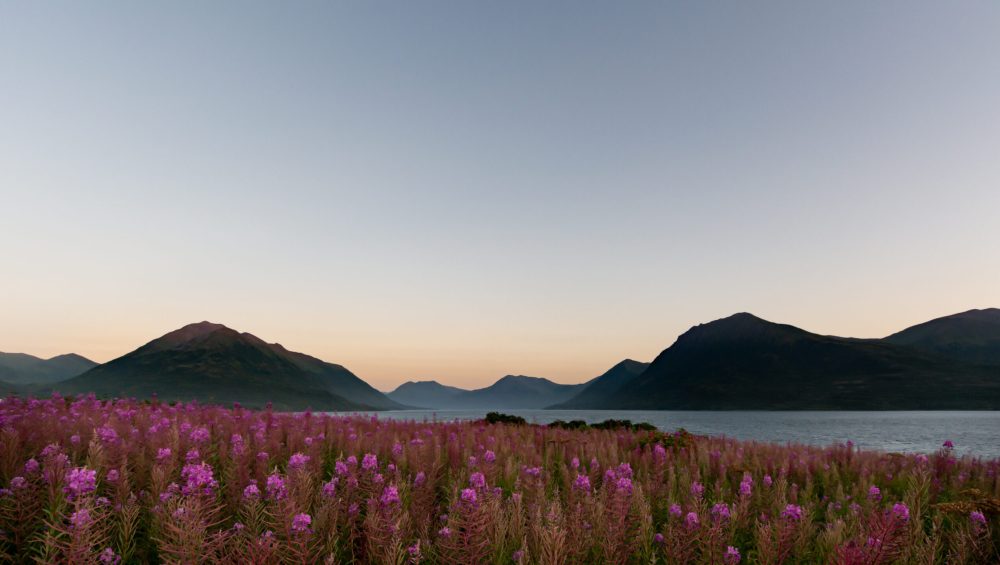
Close-up of delicate purple wildflowers in a sunlit field, with bright sunlight creating a warm, soft glow and blurred background of green grass and distant hills. Taken by Dan M Lee

The Wild Flora and Fauna of Kodiak Island

Kodiak Brown Bear Center Lodge logo with a bear paw print on the left, and a sunlit field of wildflowers in soft focus on the right.

The Wild Flora and Fauna of Kodiak Island: Nature Untamed

Kodiak Island, often called Alaska’s Emerald Isle, is not only home to the legendary Kodiak brown bear but also to a lush and vibrant tapestry of plant and animal life.

Its remote location, rugged terrain, and unique climate—mild by Alaskan standards—combine to create a rich and diverse ecosystem that bursts with color and life from the forest floor to the mountaintops.

Flora: From Coastal Meadows to Alpine Blooms

Kodiak’s plant life thrives in the summer months, with long daylight hours and abundant rainfall helping to transform the landscape into a sea of green, gold, and violet. Coastal meadows and hillsides are dotted with wildflowers like:

  • Fireweed – A tall, magenta flower that blooms after disturbances like wildfires, often carpeting open spaces and road edges by late summer.

  • Lupine – These purple-blue spikes brighten up the island’s meadows, particularly in early summer.

  • Arctic daisies, shooting stars, and monkshood – Smaller, delicate blooms that thrive in alpine areas, often blooming near streams or rocky outcroppings.

  • Crowberries and blueberries – Low-growing shrubs that produce edible berries, vital not just to bears but to foxes, birds, and even humans.

Thick stands of Sitka spruce, alders, and willows dominate the island’s forests, providing shelter and food for countless animals. Lush mosses and ferns blanket the forest floor, soaking up the constant moisture that gives the island its rich, emerald appearance.

Close-up of delicate purple wildflowers in a sunlit field, with bright sunlight creating a warm, soft glow and blurred background of green grass and distant hills. Taken by Dan M Lee
Dan M Lee
KBBC
Experience World-Class Bear Viewing
All-inclusive stays from 4 to 8 days on Kodiak Island, Alaska
Check Availability

Fauna: Wild, Winged, and Wonderful

Kodiak’s animal life is just as diverse and captivating. Of course, the Kodiak brown bear is the undisputed star—these massive, intelligent omnivores are found throughout the island. But look a little closer and you’ll find a whole cast of characters in the wild.

Birds are everywhere. The island lies along a major migratory route, making it a hotspot for birdwatching. You’ll see:

  • Bald eagles, nesting high in the spruce trees or swooping down to catch salmon from rivers.


  • Puffins, murres, and cormorants nesting along the rocky coastlines and offshore cliffs.


  • Sandhill cranes, ravens, and countless species of waterfowl, especially around the island’s wetlands and lakes.


On land, red foxes roam the fields and beaches, sometimes bold and curious, other times shy and swift. The island’s Sitka black-tailed deer, introduced in the early 20th century, are now widespread and often seen grazing in open meadows or wandering into town. River otters, weasels, and the occasional beaver can be spotted near streams and lakes.

Offshore, the waters surrounding Kodiak are equally alive. Sea otters, harbor seals, and Steller sea lions haul out on rocky beaches or float in the kelp beds. In summer, gray whales, humpbacks, and orcas patrol the coastlines, offering unforgettable glimpses of marine majesty.

A bald eagle with a white head and yellow beak perches on a tree branch, surrounded by green leaves and branches. The eagle appears to be looking down, partially obscured by the foliage. Taken by Dan M Lee
Dan M Lee

A Living Island

What makes Kodiak Island so remarkable is how its flora and fauna intertwine—the wildflowers feed the insects, which feed the birds, which become prey or companions in a much larger ecological story. The bears depend on berries and salmon, just as the foxes do on leftovers and scavenged carcasses. It’s a closed loop, rich with life and ruled by the seasons.

Whether you’re walking through a wildflower-draped meadow or watching a bald eagle launch from a spruce tree, Kodiak offers a front-row seat to one of the most intact and vibrant ecosystems in North America.

bear viewing and fly fishing in Alaska

Ready for an adventure?