Bear In the water fishing

The Math Behind Fat Bear Week: How Alaska’s Brown Bears Bulk Up

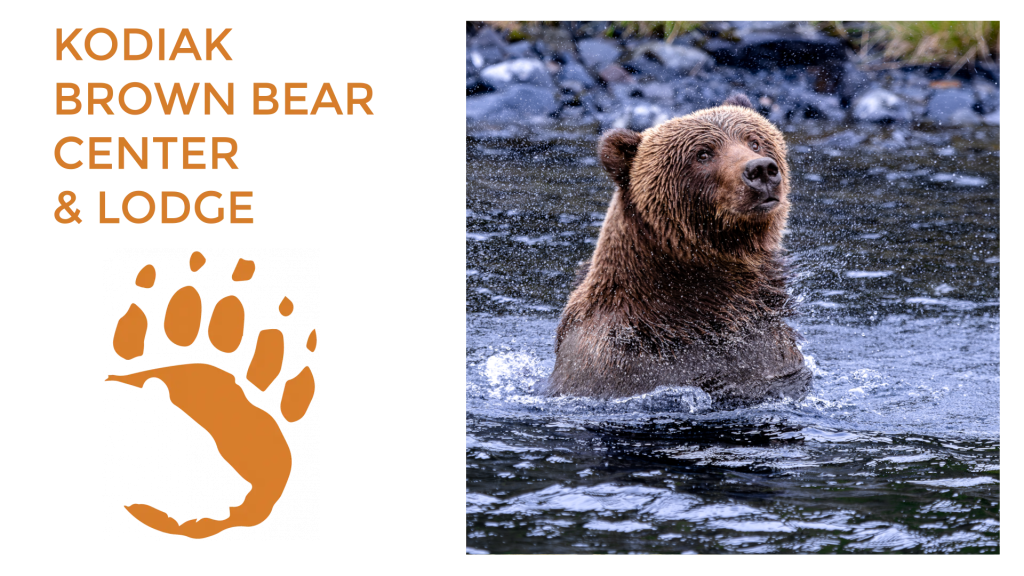
A brown bear stands in shallow water. Text reads Kodiak Brown Bear Center Lodge with an orange bear paw print graphic beside the bear photo.

Thirty salmon. Ninety pounds of fish. Six pounds of body weight, gained in a single day.

Those are the numbers a large male Kodiak brown bear can put up at the height of the salmon run, and they are the reason Fat Bear Week exists. 

Every autumn the internet votes on which of Alaska’s brown bears has done the best job of getting enormous. What fewer people see is the arithmetic underneath the photos — and it is genuinely staggering.

Here on Karluk Lake, we watch it happen from the water every day of the season. This is what the bulk-up actually costs.

Fat Bear Week 2026: The Dates

Fat Bear Week returns to Katmai National Park from 22 to 29 September 2026, in its thirteenth year. The bracket is revealed on 18 September, voting runs through the week, and the champion is crowned on 29 September. You can cast your vote at fatbearweek.org.

Last year more than 1.7 million votes came in from over a hundred countries — for a single-elimination tournament about fat bears, which tells you something about how much people love them. 32 Chunk goes in as defending champion. 128 Grazer, the first female to win back-to-back titles, is expected on the river again.

Fat Bear Week is a Katmai event, and the bears on the bracket are Katmai bears. But the biology it celebrates is playing out right now across the whole Alaskan coast — including on the Kodiak Archipelago, where the bears grow larger than anywhere else on earth.
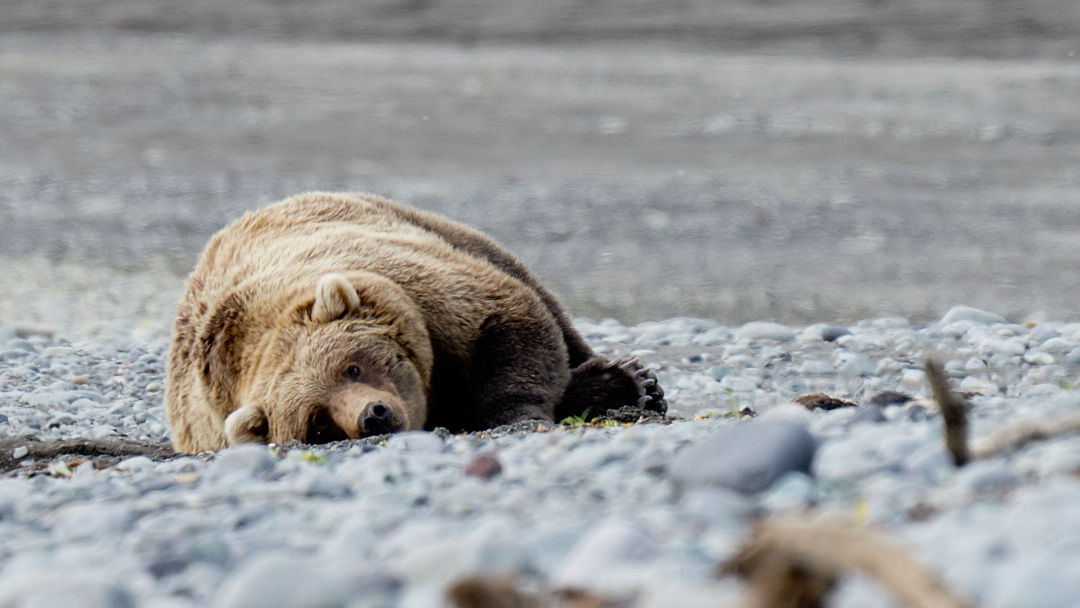
Boar male Kodiak Brown Bear
Dan M Lee
KBBC
Experience World-Class Bear Viewing
All-inclusive stays from 4 to 8 days on Kodiak Island, Alaska
Check Availability

The State That Makes It Possible: Hyperphagia

From late summer through to denning, bears enter a physiological state called hyperphagia — literally “over-eating.” It is not greed. It is a hard-wired seasonal switch

The most remarkable part is what happens to the sense of fullness. Leptin, the hormone that signals a body has had enough, is suppressed during hyperphagia. A bear in this state cannot really feel full. It simply keeps eating until it stops to sleep, then wakes and eats again, foraging for as much as fourteen hours a day.

Alaska’s bears have roughly six months to eat a year’s worth of food. Everything else follows from that deadline.

The Daily Numbers

Figures vary by bear, by sex, by rank in the hierarchy and by how good the run is that year. But the well-documented ranges look like this:

Metric

Kodiak Archipelago

Katmai / Brooks River

Salmon per day (large adult male)

Around 30

Up to 40

Weight of food per day

80–90 lbs

Up to 100 lbs

Calories per day

100,000+

Up to 100,000

Weight gained per day

Up to 6 lbs

Up to 4 lbs

Adult male weight (in season)

700–1,000 lbs

700–900 lbs (midsummer)

Very large males

Up to 1,400–1,500 lbs

Over 1,000 lbs (by October)

To put a single fish in context: a sockeye salmon caught before it spawns carries roughly 4,500 calories. A former Katmai ranger once watched the big male 856 catch and eat around eighteen sockeye across five hours — more than 80,000 calories in one evening’s fishing.

An adult human eats somewhere near 2,000 calories a day. A Kodiak bear in hyperphagia can clear fifty times that.

The Whole Season Numbers

Daily figures are dramatic, but the annual numbers are the ones that stay with you.

Researchers studying Kodiak bears used stable isotopes and mercury deposited in the animals’ hair to work out how much salmon each bear actually consumed over a year. Adult males averaged around 2,788 kg of salmon annually — roughly 6,100 pounds of fish per bear, per year. Adult females averaged about 1,364 kg, near 3,000 pounds.

The same study found something that matters well beyond bear trivia: intake rose by about 62% as salmon escapement increased. More fish left in the river means measurably bigger bears. Salmon managed purely for maximum fishery yield may sit well below what the ecosystem needs to be at its most productive. The bears are, in a real sense, a readout of how healthy the runs are.

Southwestern Kodiak’s three great lake-river systems — Karluk, Frazer and Ayakulik — carry all five Pacific salmon species and the archipelago’s highest salmon abundance. That is not incidental to why the bears here are the size they are. It is the whole explanation.
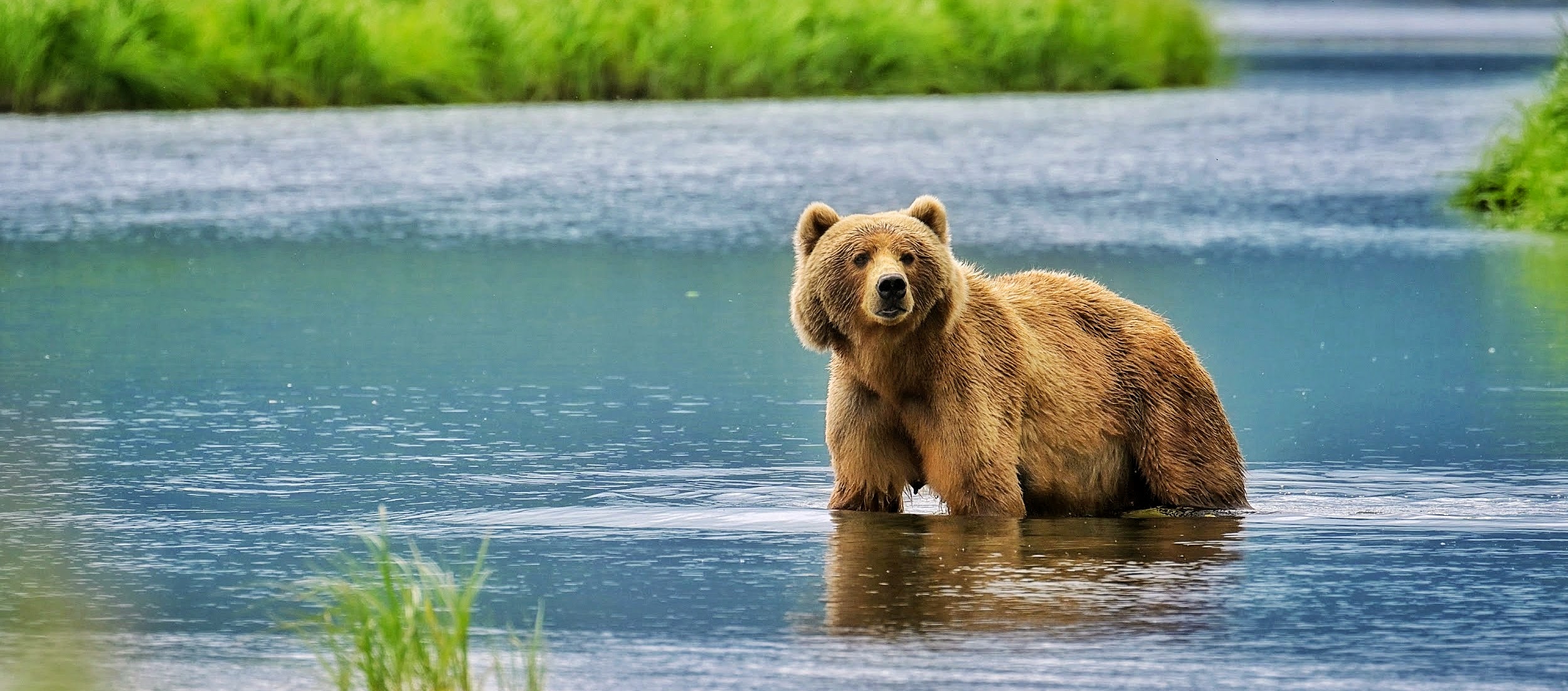
A brown bear stands in shallow water, surrounded by green grass and calm blue water, with a blurred background of more water and grass.
Dan M Lee

Why They Leave Good Fish on the Bank

Visitors are often taken aback by this. When salmon are abundant, bears stop eating whole fish and start being selective, a behaviour called high-grading.

They take the brain, the skin and the eggs, and leave the fillet behind.

It looks wasteful and it is exactly the opposite. Those are the fattiest, most calorie-dense parts of the animal. When the constraint is not finding food but processing it, the efficient strategy is to skim the richest tissue from many fish rather than fully consume a few. A bear with limited stomach capacity and a hard denning deadline is optimising for calories per minute of feeding, not for tidiness.

The leftovers do not go to waste either. Gulls, foxes, eagles and the streams themselves take up what the bears leave, moving marine nutrients into the forest. It is one of the quiet reasons salmon are the lifeblood of Kodiak Island.

What All That Fat Is Actually For

Here is the part Fat Bear Week gets right in spirit and most people underestimate in scale.

A bear emerging from the den in spring has lost up to a third of its body weight. Lactating females — who gave birth mid-winter and nursed cubs the whole time without eating — lose more.

Through denning, a bear does not eat, drink, urinate or defecate, in some cases for as long as eight months. And yet it comes out having lost very little bone mass or muscle tone, with no sign of the kidney failure that immobility of that duration would cause in a human. NASA researchers and medical scientists have studied Kodiak denning physiology for precisely this reason.

So a fat bear in September is not an indulgent bear. It is a bear that will survive to April. The ones who fall short may not. Not every Kodiak bear even dens — the archipelago’s mild winters and late runs mean some large males stay active straight through, and what happens inside the den itself is stranger still.

Kodiak's Place in the Fat Bear Story

Kodiak bears are their own subspecies, Ursus arctos middendorffi, isolated on this archipelago for roughly 12,000 years. Around 3,500 of them live here. A large male can stand over ten feet tall on his hind legs and weigh up to 1,500 pounds — the largest bears in the world, and a genuinely different animal from an interior grizzly despite sharing a species.

Fat Bear Week is something you watch on a screen. The bulk-up itself is something you can stand in front of. During the late-season salmon runs, Karluk Lake holds one of the highest concentrations of brown bears anywhere — bears fishing, high-grading, sleeping it off and doing it again, from mid-August through to the dens.

Watching a 1,000-pound animal eat its thirtieth fish of the day, from a boat on a lake in the middle of a wildlife refuge, or on land; reorganizes your sense of scale permanently.

KBBC

Where the Bears Roam Free

Private cabins • All-inclusive meals • Float plane access • Sauna

Check Availability

Frequently Asked Questions

How much does a bear eat in a day before hibernation?

A large adult male coastal brown bear may eat 80 to 90 pounds of food a day during hyperphagia, which works out to roughly 30 salmon and well over 100,000 calories. Smaller and lower-ranking bears take considerably less.

How much weight can a bear gain in one day?

Up to about six pounds a day for adult male coastal brown bears at peak feeding. The National Park Service cites around four pounds a day for Katmai’s bears.

How many calories are in a salmon?

A sockeye salmon caught before spawning contains roughly 4,500 calories. Its value drops as it spawns and its body condition declines, which is why timing matters so much to a feeding bear.

Why do bears only eat part of the salmon?

It is called high-grading. When fish are plentiful, bears eat the brain, skin and eggs — the fattiest parts — and leave the rest, maximising calories gained per minute spent feeding.

How much weight do bears lose over winter?

Up to a third of their body weight. Females who give birth and nurse cubs in the den lose more.

When is Fat Bear Week 2026?

22 to 29 September 2026, hosted by Katmai National Park. The bracket is revealed 18 September and the champion is crowned 29 September.
Sources

Alaska Department of Fish and Game — Kodiak Brown Bear Fact Sheet

U.S. Fish & Wildlife Service — Fat Bear Diet Plan

National Park Service, Katmai — Fat Bear Week 2026

National Park Service, Katmai — Bigger is Better? (M. Fitz)

U.S. Department of the Interior — Katmai’s Fat Bears

Van Daele et al., Salmon consumption by Kodiak brown bears with ecosystem management implications, Canadian Journal of Zoology

Explore.org — Fat Bear Week
bear viewing and fly fishing in Alaska

Ready for an adventure?

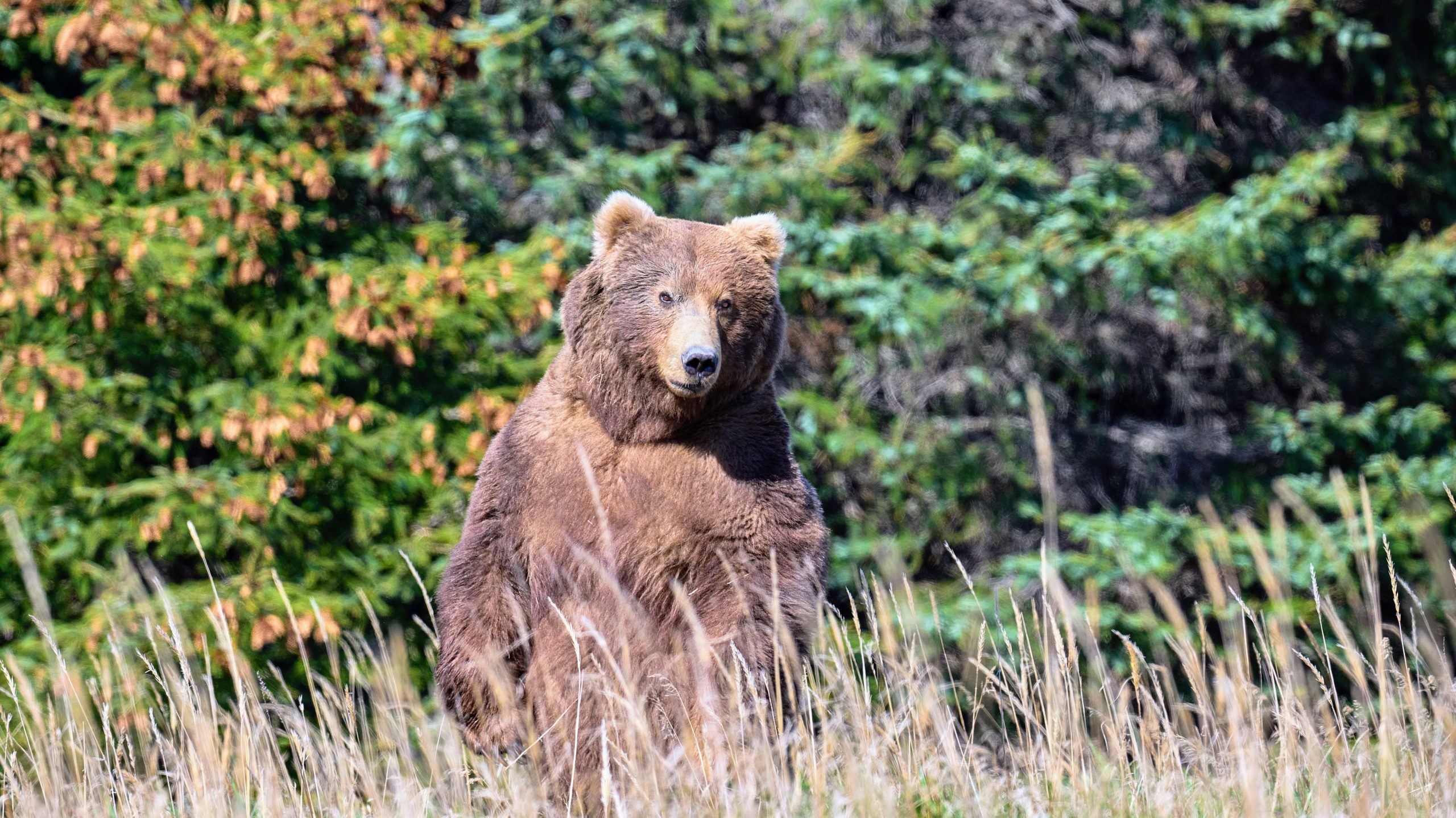
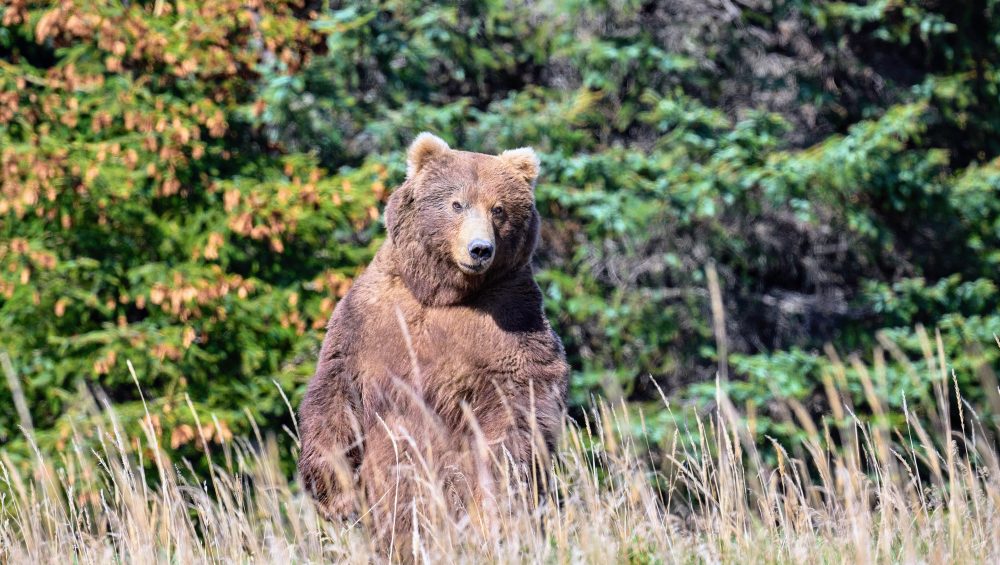
kodiak brown bear on back legs standing up

The Glorious Blubber-Fest: Why We Love Fat Bear Week

A Kodiak brown bear stands in a river, looking alert. Left side text reads “Kodiak Brown Bear Center Lodge” above an orange bear paw print logo on a white background.

Every autumn, as the salmon runs dwindle and the long Alaskan winter looms, a truly magnificent spectacle unfolds across the state, particularly in places like Katmai National Park and on the shores of Kodiak Island. It’s a celebration of survival, a testament to nature’s bounty, and frankly, a whole lot of fun: it’s Fat Bear Week!

What is Fat Bear Week?

For those unfamiliar with this internet sensation, the public casts votes for their favorite tubby bear in a bracket-style tournament.

However, the focus is on bears consuming vast quantities of sockeye salmon, aiming to achieve maximum plumpness for successful hibernation.

While the official competition highlights Katmai’s renowned bears, it’s worth noting that brown bears throughout Alaska, including the Kodiak brown bears at the Kodiak Brown Bear Center, are also undertaking this crucial and impressive bulk-up.

kodiak brown bear on back legs standing up
Dan M Lee
KBBC
Experience World-Class Bear Viewing
All-inclusive stays from 4 to 8 days on Kodiak Island, Alaska
Check Availability

Why is it so captivating?

Firstly, it’s incredibly wholesome. There’s no drama, no controversy, just bears doing what bears do best: eating.

Watching these incredible creatures transform from lean, hungry hunters into magnificent, rotund furballs is a truly inspiring display of natural resilience. They’re not just getting fat; they’re preparing for life-sustaining dormancy, a feat that deserves all the admiration we can give. At the Kodiak Brown Bear Center, visitors get a firsthand look at these giants in their natural habitat, observing the very behaviors that lead to their impressive autumn bulk.

Twix, Coco, larger than life personalities

Secondly, the “personalities” of the bears shine through. Whether it’s Katmai’s fan favorites like Otis, the wise and patient veteran, or the formidable 747, or the individual bears guests become familiar with at the Kodiak Brown Bear Center, each animal has a story.

At the Kodiak Brown Bear Center we name our regular bears which grace our lands, we have had “Coco”, “Twix” and many other bears (not all named after confectionary)

There are histories of clever fishing techniques, rivalries, and triumphs, all documented through stunning photographs and videos by dedicated naturalists. This narrative element makes the observation all the more engaging.

Beyond the sheer enjoyment of watching chunky bears, Fat Bear Week serves a vital educational purpose. It highlights the importance of healthy ecosystems and abundant salmon populations for the survival of these magnificent animals. It brings attention to conservation efforts and the delicate balance of nature, especially in pristine environments like Kodiak Island.

The Kodiak Brown Bear Center is at the forefront of this, offering unparalleled opportunities to learn about and appreciate these incredible creatures up close, fostering a deeper understanding of their world.

Bear watching is fun

Finally, it’s just plain fun! The playful banter among online voters, the anticipation of each new round, and the joy of seeing your favorite bear advance – it’s a unique and heartwarming event that brings people together. But for a truly immersive experience, witnessing these massive, well-fed Kodiak brown bears in person at the Kodiak Brown Bear Center offers an unforgettable perspective on the glorious blubber-fest that is Alaska’s autumn.

bear viewing and fly fishing in Alaska

Ready for an adventure?

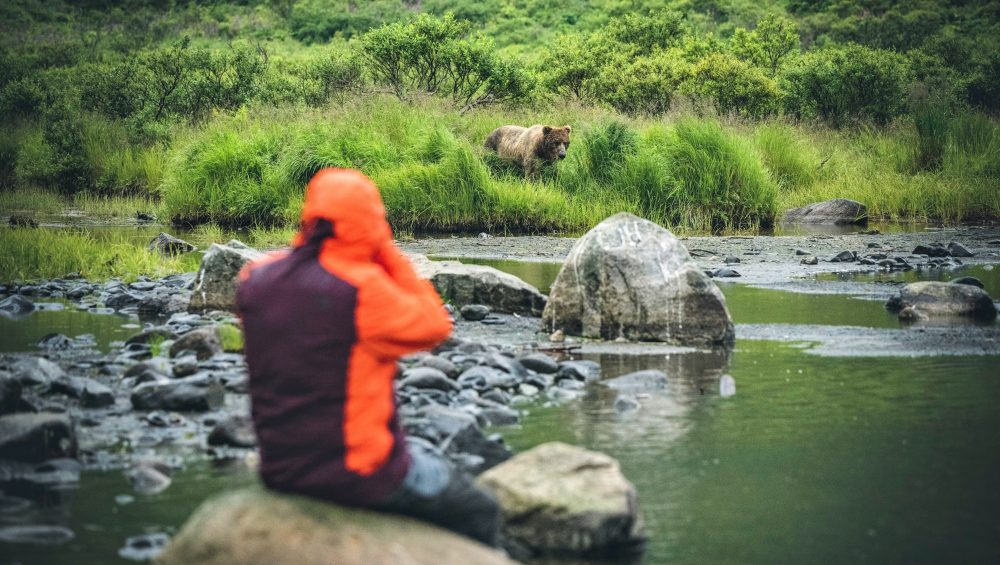
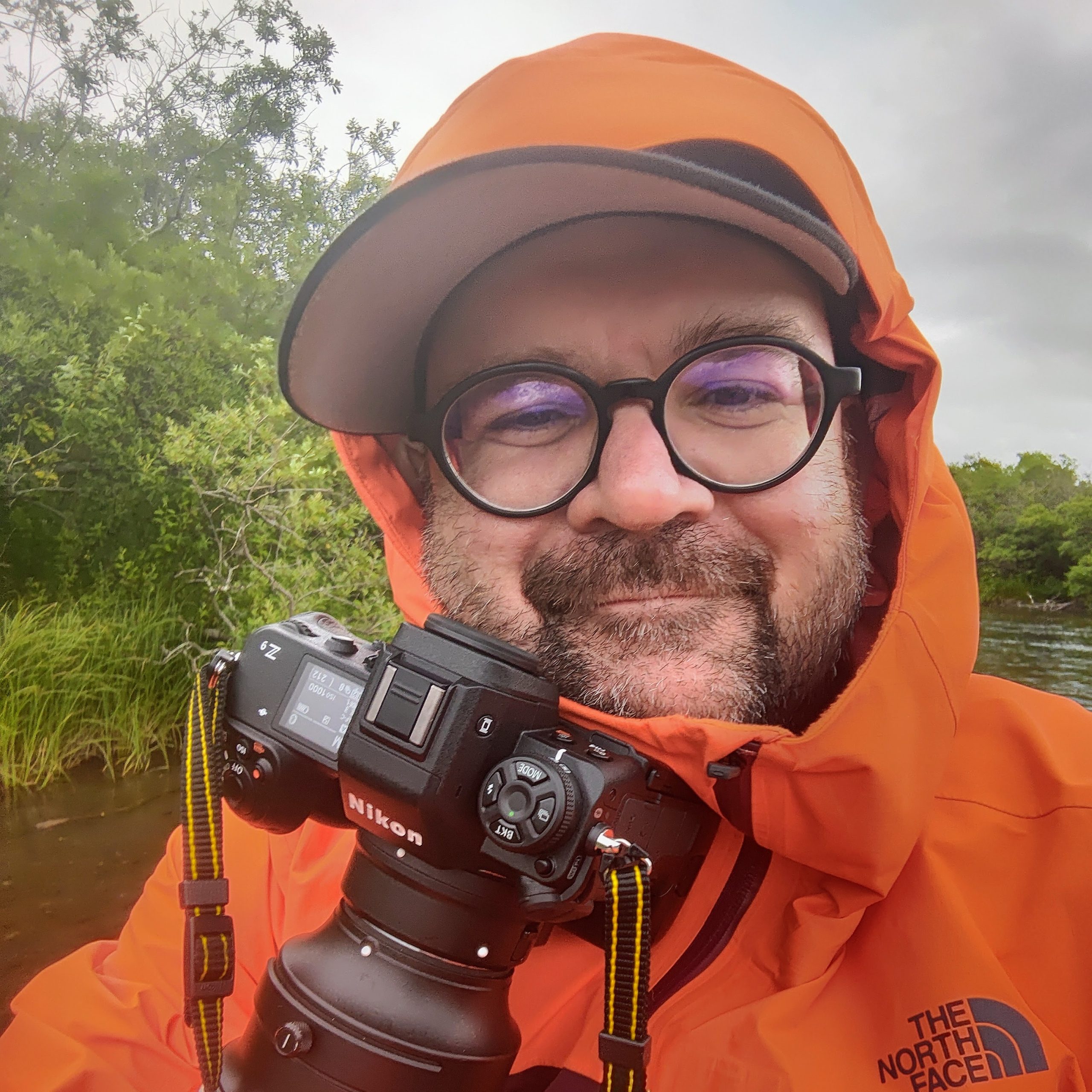
Dan M Lee in an orange jacket sits on rocks near a riverbank, photographing or observing a brown bear in the grass across the water, surrounded by green vegetation.

Essential Camera Gear for Bear Viewing

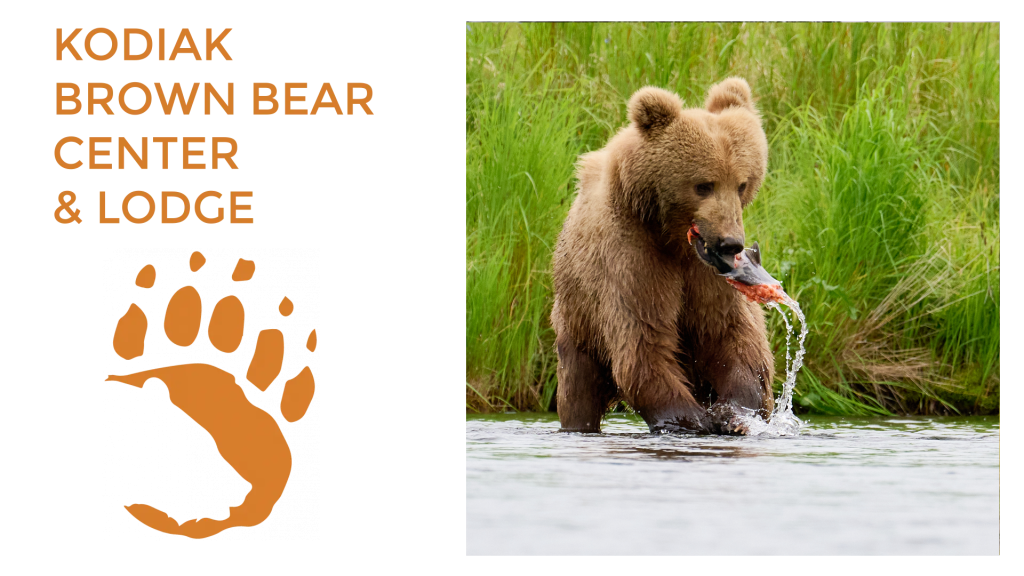
A brown bear stands in a river, catching a fish in its mouth. On the left, orange text reads Kodiak Brown Bear Center Lodge above a bear paw print graphic. Green grass is visible in the background.

You’ve booked the trip. You’re coming to Kodiak. You are ready to see the island’s magnificent bears, and you want the photos to prove it. But one look at a camera forum and your head is spinning: teleconverters, mirrorless, F-stops… it’s a lot.

Let’s cut through the noise.

While your camera body is important, the glass you put in front of it is what will make or break your photos. You don’t need a bag stuffed with 10 different lenses. For a beginner coming to view wildlife, you can cover 99% of your shots with just three.

Here’s a direct, no-fuss guide to the three lenses you should pack for your bear viewing adventure

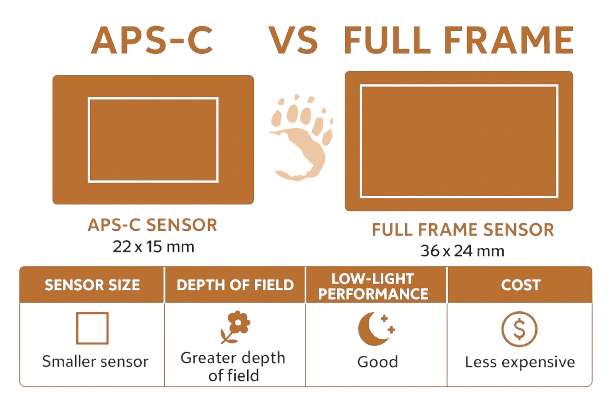
A Quick Detour: Full Frame vs. Crop Sensor

Before we list the lenses, we have to talk about this. It’s the one bit of technical jargon you need to know.

  • Full Frame: The camera’s sensor (the “digital film”) is bigger. It’s great in low light and captures a wider scene. 35mm film size if you are of the older generation.

  • APS-C (Crop Sensor): The sensor is smaller. This is not a “worse” thing; it’s just different. In fact, for wildlife, it can be a secret weapon.

Why? Because the smaller sensor “crops” the image, it effectively magnifies your lens. This is called the “crop factor.” A 300mm lens on an APS-C camera acts more like a 450mm lens. You get 1.5x (or 1.6x) more “zoom” for free! You can put a Full Frame camera into “crop mode” which is the same thing.

For this list, we’ll talk about lens focal lengths in their standard (full-frame) terms. Just remember, if you have a crop sensor, you’re getting even more reach!

Comparison chart showing APS-C 22 x 15 mm vs Full Frame 36 x 24 mm sensors with icons indicating APS-C is smaller, has greater depth of field, and is less expensive; Full Frame has better low-light performance.
Benefits of APS-C "Crop Sensor"

The Big Gun: The 100-400mm (or 150-600mm)

This is your real wildlife lens. This is how you get those frame-filling shots.

Let’s be direct: You will be viewing bears from a safe distance. Park regulations and simple common sense demand it. You will not be (and should not be) close enough to get a headshot with your phone.

A lens in the 100-400mm or 150-600mm range is the new beginner standard. It gives you the “reach” you need to fill your frame with a bear that is way, way over there. These “super-telephoto” zooms are sharp, relatively affordable, and let you get the shot without ever disturbing the wildlife (or becoming its lunch). This is the lens that will likely spend the most time on your camera.

KBBC
Experience World-Class Bear Viewing
All-inclusive stays from 4 to 8 days on Kodiak Island, Alaska
Check Availability
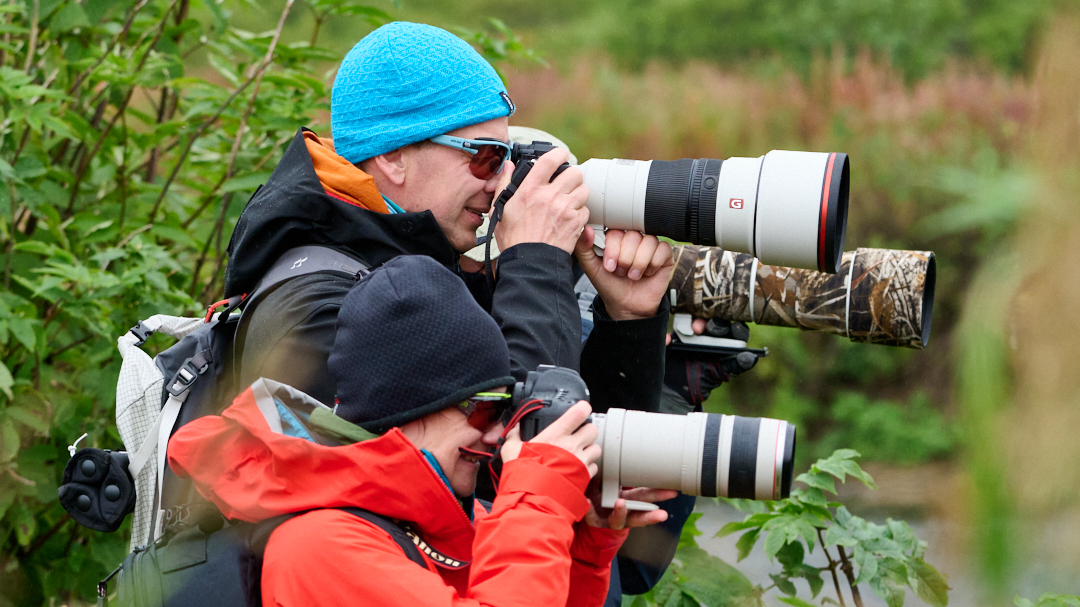
Two people wearing colorful jackets and hats hold cameras with large telephoto lenses, aiming them forward while standing in a lush, green outdoor setting. Taken by Dan M Lee
Dan M Lee - Big Lenses

The Storyteller: The 24-70mm (or 16-35mm)

A wide-angle lens? For wildlife? Absolutely.

You are not just here to photograph a bear; you are here to photograph a bear in Kodiak. The landscape is just as much a character in your story.

When a bear is a distant speck on the beach, don’t put your camera away. Put on your wide-angle lens. Use it to capture the epic scale of the mountains, the dramatic coastal weather, and the sheer vastness of the bear’s world. A photo of a small bear in a huge, beautiful landscape tells a more powerful story than a simple close-up. This lens is for capturing the “sense of place.”

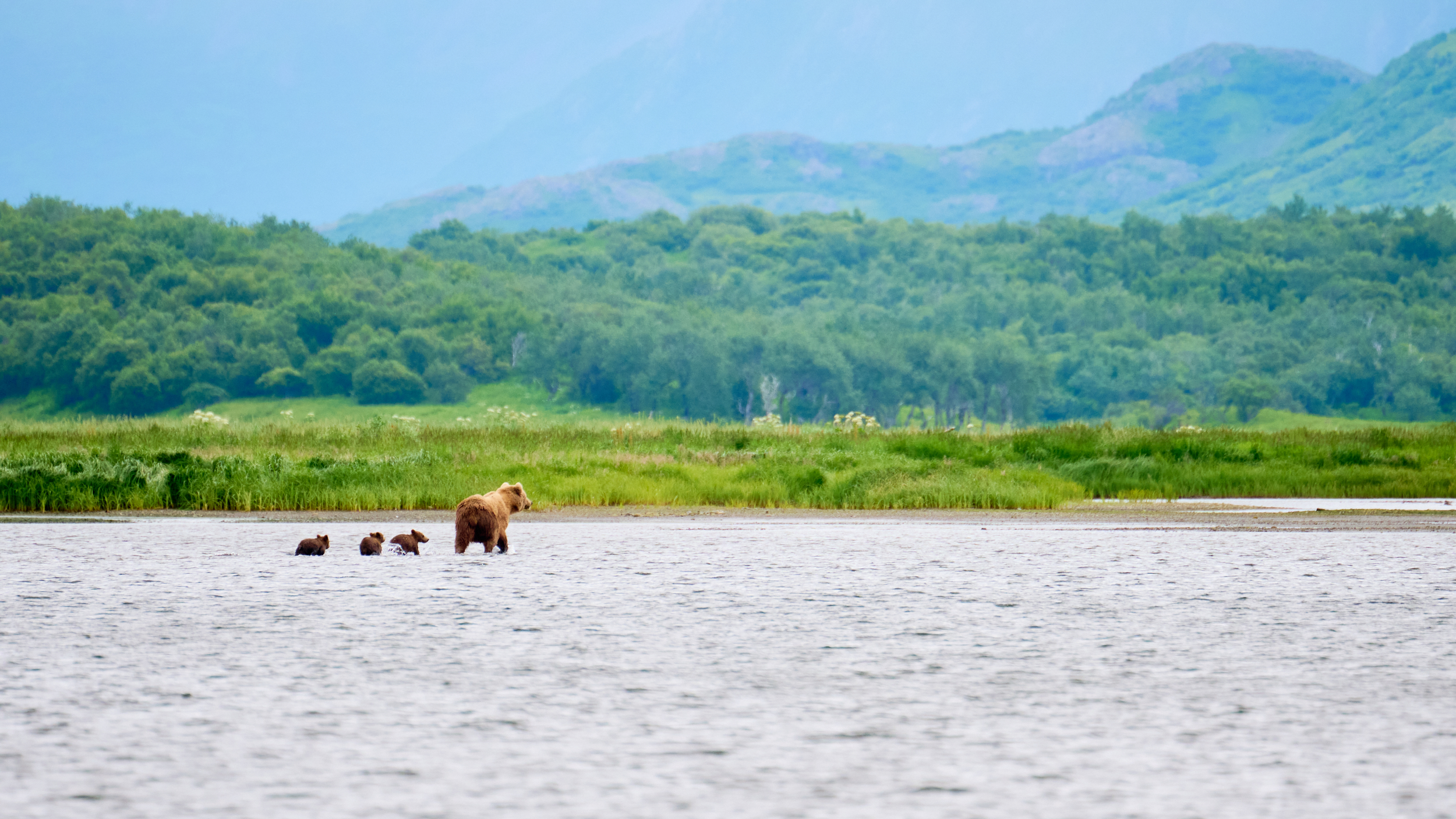
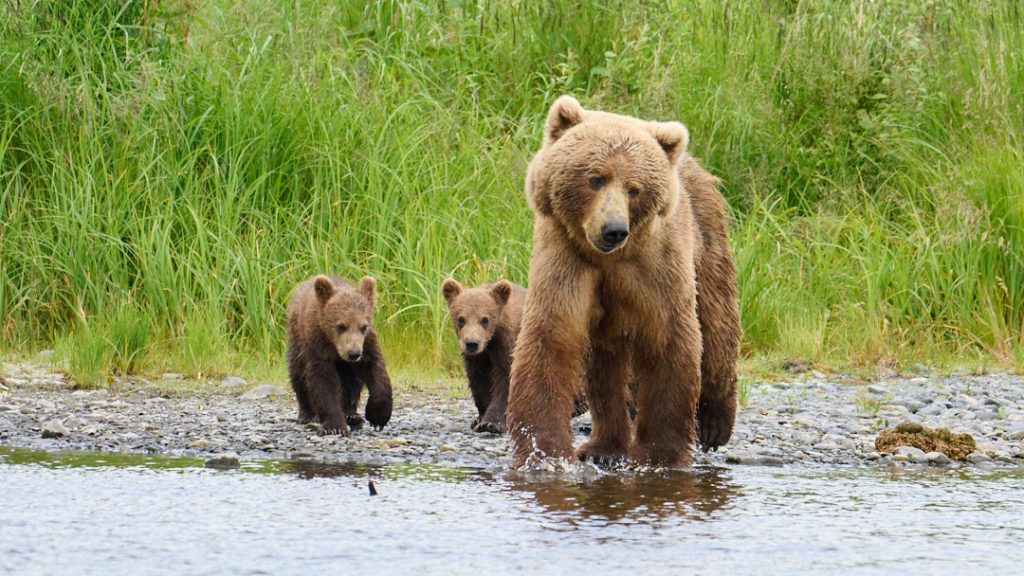
A brown bear with three cubs walks through shallow water, surrounded by lush green vegetation and distant mountains on a cloudy day.
Dan M Lee

The Workhorse: The 70-200mm Zoom

This is your “all-rounder” lens. It’s a classic for a reason.

A 70-200mm lens is versatile. It’s wide enough at 70mm to capture a bear within its environment—maybe walking along the shoreline with mountains in the background. At 200mm, it’s sharp and powerful enough to get a lovely half-body portrait when you have a good (but safe!) view.

If you can spring for the f/2.8 version, it’s amazing in the cloudy, low-light days we often get on Kodiak. But don’t sleep on the f/4 versions—they are significantly lighter, cheaper, and still incredibly sharp.

Photography Worshops

That’s it. A workhorse zoom, a big telephoto for reach, and a wide-angle for story. With these three lenses, you are prepared for almost any situation Kodiak throws at you. One last thing, don’t forget some high powered, lightweight binoculars. 

Want to really learn how to use those lenses? I can help with that. I’m Dan M. Lee, and I run award-winning photography workshops right here at the lodge.

When I’m not writing for publications like Digital Camera World, I’m out here helping guests get the shot of a lifetime. Look out for my workshop dates; it’s a fantastic way to take your new gear and your skills to the next level.

bear viewing and fly fishing in Alaska

Ready for an adventure?

Two people wearing colorful jackets and hats hold cameras with large telephoto lenses, aiming them forward while standing in a lush, green outdoor setting. Taken by Dan M Lee

Capturing Giants: How to Photograph Kodiak Bears Safely and Respectfully

safely photography brown bears in alaska

The Kodiak brown bear, a magnificent symbol of Alaska’s wilderness, draws photographers from across the globe to its native island.

At the Kodiak Brown Bear Center, nestled within the pristine landscape of Karluk Lake, we offer unparalleled opportunities to witness these incredible animals. But with such powerful subjects, comes the responsibility to photograph them safely and ethically.

Here are my key principles to ensure your bear photography experience is both rewarding and respectful.

Maintain a Safe and Respectful Distance

This is the golden rule of wildlife photography, especially when it comes to apex predators like the Kodiak brown bear. Although you would be surprised the simple logic is lost on a rare few.

Bears need their space, and encroaching on it can cause stress, alter their natural behavior, and even lead to dangerous encounters.

  • Utilize Your Telephoto Lens: Forget about getting up close with a wide-angle lens. A powerful telephoto lens (400mm or more is recommended) is essential for capturing detailed shots from a safe distance. This allows you to fill the frame without putting yourself or the bear at risk.
  • Observe Bear Behavior: Pay close attention to the bears’ cues. If a bear stops what it’s doing, raises its head, or changes its direction of movement because of your presence, you are too close. If you see signs of agitation – huffing, jaw-popping, or bluff charges – you’ve definitely crossed the line and need to back away slowly and calmly.
  • Follow Your Guide’s Instructions: At the Kodiak Brown Bear Center, our expert guides are highly trained in bear behavior and safety protocols. They will position you in optimal viewing locations that prioritize both your safety and the bears’ well-being. Always adhere to their instructions, as they are there to ensure a positive experience for everyone.
Two people wearing colorful jackets and hats hold cameras with large telephoto lenses, aiming them forward while standing in a lush, green outdoor setting. Taken by Dan M Lee
Dan M Lee
KBBC
Experience World-Class Bear Viewing
All-inclusive stays from 4 to 8 days on Kodiak Island, Alaska
Check Availability

Prioritize Ethical Practices Over the "Perfect Shot"

The pursuit of a unique or dramatic photo should never come at the expense of the animal’s welfare. Ethical wildlife photography means putting the bear first.

  • Never Habituate Bears: Avoid any actions that could lead bears to associate humans with food or a source of disturbance. This means never feeding bears, leaving food scraps, or approaching them in a way that makes them comfortable with human presence. Wild bears should remain wild.
  • Minimize Your Impact: Move slowly and quietly in bear country. Avoid sudden movements, loud noises, or anything that could startle a bear. When with a group, stay together and speak in low tones. Remember, you are a guest in their home.
  • Respect Their Routine: Bears have their daily routines of foraging, fishing, resting, and interacting with their environment. Interrupting these behaviors for a photo opportunity is unethical. Allow them to go about their lives undisturbed, and you’ll often capture more authentic and compelling images.
  • WAIT: Sometimes you just have to wait for a moment to occur while thinking about the last few points. Sometimes it’s way better to let nature come to you, rather than the other way round.
Photographing Kodiak Brown bears in the wild
Dan M Lee

Be Prepared and Aware of Your Surroundings

Being well-prepared not only enhances your chances of great photos but also significantly contributes to your safety.

  • Understand Bear Safety Protocols: While our guides at the Kodiak Brown Bear Center will provide comprehensive safety briefings, it’s always beneficial to familiarize yourself with general bear safety guidelines. Know what to do in various bear encounter scenarios, though our guided tours are designed to prevent such situations.
  • Carry Essential Gear: Beyond your camera and lenses, ensure you have extra batteries, plenty of memory cards, and protective gear for your equipment in case of rain. Dress in layers and wear sturdy, waterproof hiking boots, as the terrain can be uneven.
  • Stay Alert: Always be aware of your surroundings. Scan the landscape for bears, their tracks, or other signs of their presence. Good situational awareness is key to avoiding surprises and ensuring a safe and enjoyable experience for everyone.
  • Know Your Kit: If you have a walkstool or something similar sit on make sure you don’t leave it behind anywhere. 

By adhering to these principles, you’ll not only capture breathtaking images of the magnificent Kodiak brown bears but also contribute to their conservation by demonstrating responsible and respectful wildlife photography practices.

We look forward to welcoming you to the Kodiak Brown Bear Center for an unforgettable adventure either during a photography workshop on select dates or not. 

Want to see Kodiak bears in person? Explore our bear viewing packages →
bear viewing and fly fishing in Alaska

Ready for an adventure?

Sow Female Bear With Young

How to Tell the Difference Between Male and Female Kodiak Brown Bears

A Kodiak brown bear with two cubs walks along a riverbank with green grass behind them. On the left, orange text reads Kodiak Brown Bear Center Lodge above a bear paw print.

Kodiak brown bears are massive, powerful, and—at first glance—can look quite similar regardless of gender. But with a bit of observation and the right knowledge, you can learn to distinguish a boar (male) from a sow (female) in the wild.

This skill can add depth to your bear watching experiences and help you understand more about their behaviors, especially if you’re lucky enough to view them in the wilds of Kodiak Island, Alaska.

Size and Build: Bigger Isn't Always Better… Unless You're a Boar

The most obvious difference is size. Adult male Kodiak bears are typically much larger than females. Boars can weigh over 1,200 pounds, with some tipping the scales at 1,500 pounds or more. They tend to have a heavier, bulkier build with broader heads, thicker necks, and heavily muscled shoulders.

Females, in contrast, are more streamlined and less blocky in appearance. They generally max out around 600 to 800 pounds, though large sows can appear closer in size to younger or leaner males, especially during the summer before the fall fattening season.

Boar male Kodiak Brown Bear
Dan M Lee

Head Shape and Facial Features

Boars tend to have a wider, more square-shaped head and thicker, shorter necks. Their faces often appear flatter and more robust, particularly around the snout and jaw.

Sows have narrower, more tapered heads with longer-looking snouts and slightly more delicate facial features. If you get a good profile view, look for a smoother, more sloped forehead in females.

Want to see Kodiak bears in person? Explore our bear viewing packages →

Reproductive Clues

The presence of cubs is the clearest giveaway that you’re looking at a sow.

Females typically give birth in the den during winter and raise cubs for 2 to 3 years, meaning there’s a good chance of seeing young bears with their mother in spring and summer.

Boars, on the other hand, never take part in raising offspring. In fact, adult males can be dangerous to cubs, as they sometimes kill them to bring the mother back into estrus.

Behavior: Solitude vs. Family Life

Male Kodiak bears are usually solitary, especially outside of mating season. They may be seen walking alone, often covering long distances and keeping a noticeable distance from other bears unless they’re competing or mating.

Females, especially those with cubs, are far more likely to be seen in small groups.

A sow with cubs will stay close to them, guiding them across rivers or helping them fish. She’s also highly alert to other bears, particularly males, which may pose a threat to her young.

If you see a bear acting extremely cautious or defensive—frequently looking over her shoulder or bluff-charging others—it’s likely a mother protecting her cubs.

Sow Female Bear With Young
Dan M Lee

Urination and Genital Markers (Advanced Observation)

This is for the seasoned observer with binoculars or a telephoto lens: you can sometimes identify gender based on how a bear urinates.

Females tend to urinate directly below or behind them, while males will urinate forward and downward, with more visible genitalia if seen from the right angle.

This method isn’t always practical—or polite—but for scientific observation or photography, it can be one more clue.

Recognizing the differences between male and female Kodiak brown bears helps deepen your appreciation for their behaviors and survival strategies.

Whether it’s a lone boar lumbering across a river or a protective sow fishing with her cubs, each encounter offers a window into the incredible lives of these apex predators.

Just remember—whether you’re observing males (Boars) or females (Sows), always do so from a safe distance, with respect for the bear’s space and natural behavior. After all, you’re a guest in their world.

bear viewing and fly fishing in Alaska

Ready for an adventure?

Highest Concentration of bears

Highest Concentration of Bears

Largest Concentration of Bears in Alaska, Kodiak Island

Karluk Lake is more than a breathtaking spot on Kodiak Island—it’s the lifeblood of the island’s ecosystem and a cornerstone of Alutiiq history. Stretching nearly 22 miles, this pristine lake is teeming with life. It hosts all five species of Pacific salmon—chinook, sockeye, coho, chum, and pink—along with steelhead, Dolly Varden, and Arctic char. These abundant fish runs sustain not only anglers but also the countless Kodiak brown bears and bald eagles that rely on them.

Home to the highest concentration of brown bears on Kodiak, Karluk Lake is a prime destination for wildlife viewing. Watching these massive bears fishing for salmon in their natural habitat is a humbling experience. It’s not uncommon to spot bears wading through the shallows or perched along the shoreline, their sheer presence a testament to the wildness of this land.

Karluk Lake offers more than just incredible wildlife—it holds a story that stretches back thousands of years. This land has been a cornerstone for the Alutiiq people, who have lived along its shores, fished its waters, and hunted its forests for generations. Archaeological sites around the lake reveal ancient settlements, where its abundant resources sustained life. For us, Karluk Lake is not just a natural resource; it is a spiritual and cultural touchstone, linking us to our ancestors and the land itself.

We are honored to operate near this remarkable place at the Kodiak Brown Bear Center and Lodge. Our mission is to share the beauty of Karluk Lake and its wildlife while safeguarding its fragile ecosystem. Guests at the lodge have the rare chance to explore this special area in a respectful manner, discovering not only the awe-inspiring bears and fishing experiences but also the profound cultural significance of the land.

Kodiak brown bears in the wild at kodiak brown bear center and lodge photography workshop
KBBC
Experience World-Class Bear Viewing
All-inclusive stays from 4 to 8 days on Kodiak Island, Alaska
Check Availability

For anglers, Karluk Lake offers some of the best fishing in Alaska. The salmon runs here are legendary, drawing enthusiasts from around the world. And for those who prefer quieter moments, the lake’s stillness and natural beauty offer a chance to connect with nature on a deeper level.

What makes Karluk Lake truly special is its timelessness. Standing on its shores, you feel a connection to the past, present, and future. The bears and fish follow ancient rhythms, the landscape remains as untouched as it was centuries ago, and the stories of those who came before echo in every breeze.

Whether you’re drawn by the promise of world-class fishing, the thrill of watching bears up close, or the chance to step into a piece of Alaska’s history, Karluk Lake offers an experience like no other.

We invite you to join us at the Kodiak Brown Bear Center and Lodge to explore this incredible place. It’s more than a destination—it’s a story waiting to be told.

bear viewing and fly fishing in Alaska

Ready for adventure?