
When the Kodiak Archipelago tips into late October, the bears that have spent the summer fishing salmon in our streams and grazing on hillsides begin a quiet retreat. Within a few short weeks, most of Kodiak’s roughly 3,500 brown bears will disappear from the landscape entirely, vanishing into dens carved high above the valleys they roam in summer. What happens inside those dens — and the careful choices each bear makes about where to sleep — is one of the most remarkable chapters in the Kodiak bear’s life cycle.
This post takes a closer look at den biology, the types of dens Kodiak bears build, the deliberate way they pick their sites, and how their denning habits set them apart from other brown bears around the world.
A Slowed-Down Body, Not a Sleeping One
Kodiak bear hibernation isn’t quite the deep, mouse-like torpor most people imagine. Biologists often call it “carnivore lethargy” or use the more accurate term denning. A denning Kodiak bear drops its heart rate from a summer resting average of around 50 beats per minute down to as low as 8–12 beats per minute. Body temperature falls only modestly — by perhaps 4–7°F — which keeps the bear capable of waking quickly if disturbed.
What makes the Kodiak’s hibernation extraordinary is what doesn’t happen. Despite going without food, water, urination, or defecation for up to six months, a bear emerges from the den with its bone density essentially intact and its muscle mass largely preserved. They achieve this by recycling urea — the waste product that would normally be excreted as urine — back into useful amino acids and protein. It’s a metabolic trick medical researchers have studied for decades, hoping to apply it to human conditions like osteoporosis and kidney disease.
Pregnant sows take this further still. In the deep cold of January or February, a denning female will give birth to one to four cubs, each weighing less than a pound. She’ll nurse them in total darkness for two to three months while still in a hibernating state, mobilising her own fat reserves to produce milk that’s roughly a third fat by composition.
Limited to 8 Guests
Your Private Alaskan Wilderness Retreat Awaits
Stay in private cabins on Karluk Lake — home to the highest concentration of Kodiak brown bears. All-inclusive packages from $5,600 pp.
The Dens Themselves
Kodiak bears build several distinct types of dens, and the choice often reflects what the surrounding terrain has to offer.
The most common is the excavated earth den — a tunnel and chamber the bear digs itself, usually into a steep, well-drained slope. A typical Kodiak den has a short entry tunnel of three to six feet leading to a sleeping chamber just large enough to curl up in. Bears line the chamber with dried grasses, alder branches, and moss they tear up nearby, forming an insulating mat that keeps them off the cold ground. Excavation is genuinely hard work; a sow with cubs may move a tonne or more of soil and rock before she’s satisfied.
Where the geology cooperates, bears will use rock cavity dens — natural crevices, talus pockets, or shallow caves they enlarge slightly. These tend to be more durable than earth dens and are sometimes reused across decades, occasionally by different bears.
A smaller share build root-mass dens beneath the upturned root plates of large fallen trees, taking advantage of the natural cavity beneath. And in years with deep, stable snowpack, you’ll occasionally see snow dens, especially at higher elevations or among adolescent bears who haven’t yet established a denning routine.
Most Kodiak bears dig a fresh den each year. Site fidelity exists, but it’s the general area a bear returns to — not the specific den itself.
Choosing the Right Slope
Den site selection is one of the most studied behaviours in Kodiak bear biology, and the patterns are surprisingly consistent. Three variables matter most: slope, elevation, and aspect.
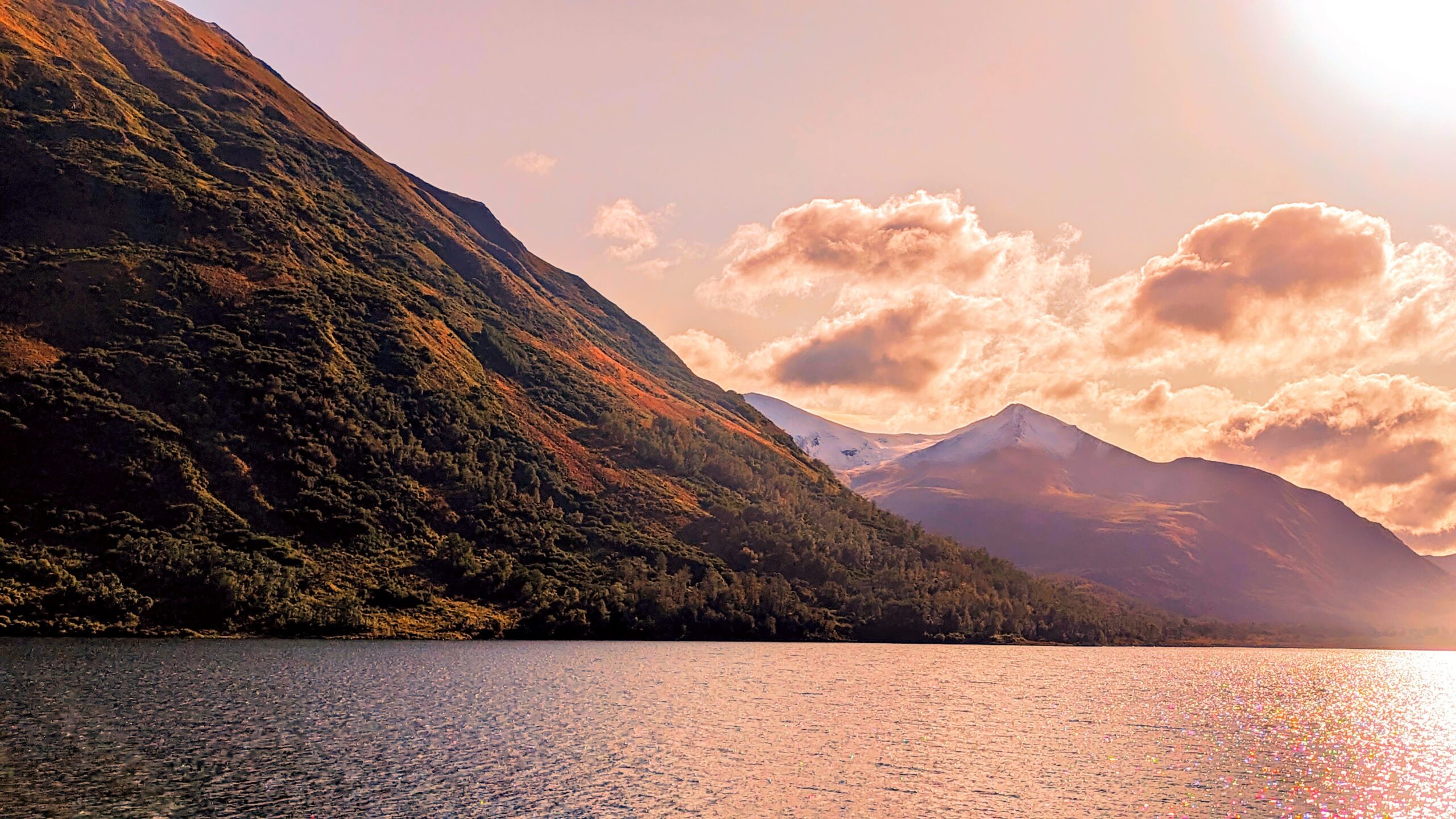
Slope is the strongest predictor. Kodiak bears overwhelmingly choose steep terrain — typically between 30 and 45 degrees — for the simple reason that steep ground sheds water. A flat or gently sloping den floods during the spring melt; a steep one stays dry. Steep slopes also accumulate the deep, insulating snowpack that effectively turns a den into a sealed, well-insulated chamber for the winter.
Elevation tends to fall between 1,000 and 2,500 feet on Kodiak Island, with most dens clustered in the 1,500–2,000 foot band. This is the sweet spot where snow cover is reliable, human disturbance is minimal, and the surrounding alpine and subalpine vegetation provides quick post-emergence food. Lower-elevation dens exist, particularly on the wetter southern parts of the archipelago, but they’re the exception.
Aspect — the compass direction a slope faces — is the subtlest factor. North-facing slopes are favoured on Kodiak, which initially seems counterintuitive: surely a sun-facing slope would be warmer? The answer lies in snow stability. North-facing slopes hold their snow longer and more consistently through the winter, providing the steady insulation that matters more than direct warmth. They’re also less prone to mid-winter thaw events that can flood a den or cause a bear to emerge too early.
Many bears also choose sites with vegetation cover above the den entrance — alder, salmonberry, or stunted spruce — which both stabilises the soil and provides additional snow capture.
Why Kodiak Denning Looks Different
Kodiak bears are a distinct subspecies (Ursus arctos middendorffi), genetically isolated from mainland brown bears for roughly 12,000 years, and their denning habits show some clear differences from their cousins.
Compared to interior Alaskan grizzlies, Kodiak bears den at lower elevations and for slightly shorter periods. An interior grizzly may den for seven months in a high alpine site at 4,000 feet or above; a Kodiak male may den for as little as four to five months and rarely above 2,500 feet. The maritime climate of the archipelago — milder winters, deeper but wetter snow, and abundant late-season food in the form of intertidal carrion and lingering salmon — allows for a shorter dormancy.
Coastal mainland brown bears, like those along the Katmai coast, share many similarities with Kodiaks but tend to use rock cavity dens at a lower rate, simply because the volcanic geology of the Alaska Peninsula offers fewer of them. European brown bears and Russian Kamchatka bears, meanwhile, often den communally or in shared cave systems — behaviour virtually never seen on Kodiak, where dens are strictly solitary outside of mothers with cubs.
Perhaps the most striking difference is timing. Adult male Kodiak bears, particularly large boars in good condition, sometimes don’t den at all in mild years, remaining active throughout the winter feeding on deer, intertidal life, and overwintered berries. This is rare in interior populations, where winter conditions simply don’t allow it.
A Window Into Kodiak
Understanding where and how Kodiak bears den isn’t just academically interesting — it’s central to managing the population responsibly. Den disturbance during winter is one of the most significant stressors a bear can face, and it’s why the Kodiak Brown Bear Center and our partners advocate for careful season closures and respectful viewing distances during emergence in late spring.
The next time you watch a Kodiak bear lumber along a salmon stream in July, it’s worth remembering that just three months earlier, that same animal was curled in near-total darkness on a steep mountainside, breathing perhaps four times a minute. The summer giant and the silent winter sleeper are the same bear — and the den is what makes both possible.

Content Author & Alaska Photographer
I lead photography workshops at the Kodiak Brown Bear Center and create engaging, high-quality content for blogs and websites across Alaska and beyond. My deep passion for wildlife—especially Kodiak bears—continually inspires my work and fuels my storytelling.