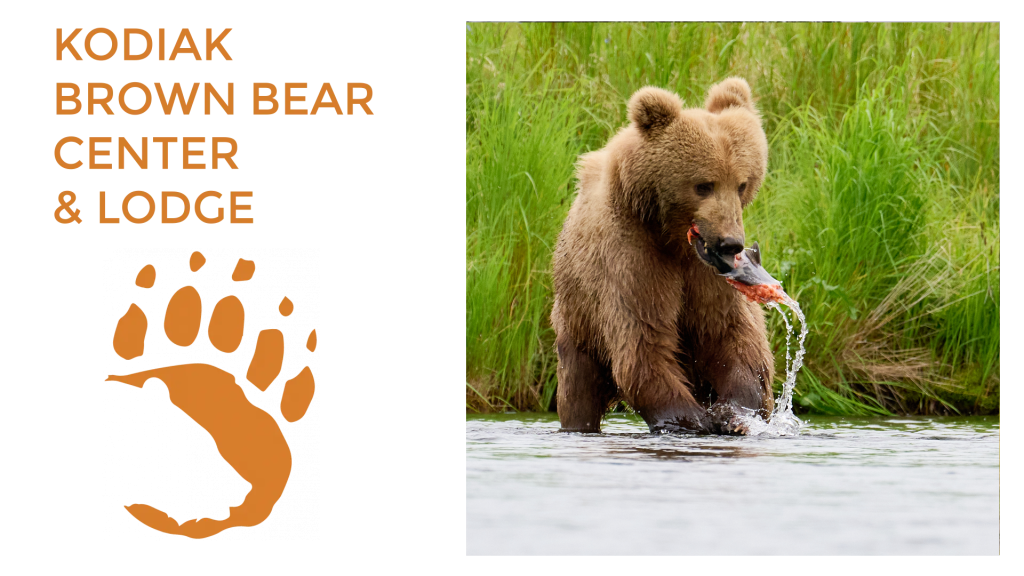
By early summer, the grazing phase ends abruptly with the arrival of the salmon. This metabolic switch—from a low-calorie vegetarian diet to high-fat protein—triggers the most active and photographically dynamic period of the bear’s year.
Let’s explore the Kodiak brown bears love for fish during the season.
Sockeye Time
The first major event is the Red Salmon, or Sockeye, run, occurring from mid-June to mid-July.
Because Sockeye are energetic and fast, bears often have to work harder to catch them, leading to more “chasing” behaviors where bears sprint through shallow water or plunge from banks.
This is often the best time for action shots; while the bears are still shedding their winter coats and may look a bit shaggy, the backdrop is usually a vibrant, lush green.
Pink
As the season progresses into late July and August, the Pink Salmon (Humpbacks) arrive in staggering numbers.
This abundance changes the bears’ behavior from frantic hunting to selective feasting, often referred to as “high-grading.” Bears will catch a fish and eat only the high-fat skin and brains, discarding the rest to put on massive weight quickly.
Around August 1st, specifically in systems like the Karluk River, the dynamic shifts again as the sheer biomass of fish draws the large, dominant boars out of the dense brush, making early August the prime window to capture the largest bears on the island.
Silver Coho
Finally, as the season cools from late August through September, the Silver Salmon (Coho) arrive.
These are larger, stronger fish, and by now the bears are heavy, round, and fully prepared for the coming winter. The frantic energy of June is replaced by a methodical, heavy plod as bears at their maximum weight move with a slow, powerful purpose, their coats fully restored and glossy.
The aesthetic changes dramatically here as well, with lush greens fading to gold and rust, offering a moody, autumnal palette that contrasts beautifully with the dark fur of the bears.
Time for Hibernation Again
As the Coho run dwindles and the first heavy snows dust the higher elevations in late October and November, the bears’ metabolic clock begins to wind down once more.
The frenetic energy of the fishing season is replaced by a profound lethargy, a biological signal that their bodies are ready for the long sleep.
Having secured the necessary fat reserves to survive the harsh Alaskan winter, they leave the river valleys and ascend back to the steep, snow-covered slopes.
There, they will excavate or re-enter their dens, completing the annual cycle and vanishing into the white landscape until the spring thaw calls them forth again.

Content Author & Alaska Photographer
I lead photography workshops at the Kodiak Brown Bear Center and create engaging, high-quality content for blogs and websites across Alaska and beyond. My deep passion for wildlife—especially Kodiak bears—continually inspires my work and fuels my storytelling.