A brown bear stands in a stream surrounded by green foliage. On the left, orange text reads Kodiak Brown Bear Center Lodge above an orange bear paw print graphic.

On Kodiak Island, where misty mountains rise above salmon-filled rivers, the Kodiak brown bear reigns as one of nature’s true giants. Known for its impressive strength and sheer size, this subspecies of brown bear (Ursus arctos middendorffi) has fascinated wildlife enthusiasts, photographers, and scientists for decades.

But just how heavy are these bears—and how do they compare to others around the world?

The Massive Weight of the Kodiak Brown Bear

Kodiak bears are among the largest omnivores on Earth. Adult males typically weigh 800 to 1,200 pounds (360–545 kg), with some exceptional individuals exceeding 1,500 pounds (680 kg) in late summer and fall when they’ve fattened up for hibernation. Females are smaller, usually ranging from 400 to 700 pounds (180–320 kg).

The key to their size lies in abundance. Kodiak Island’s ecosystem provides a feast—salmon runs, lush vegetation, and access to coastal food sources allow these bears to reach their record-breaking weights without needing to compete with other large predators.

How Kodiak Bears Compare to Other Bear Species

While the Kodiak bear often takes the title of “largest bear,” it actually shares that honor with another heavyweight—the polar bear.The Kodiak bear is the largest brown bear, the polar bear the largest of all.

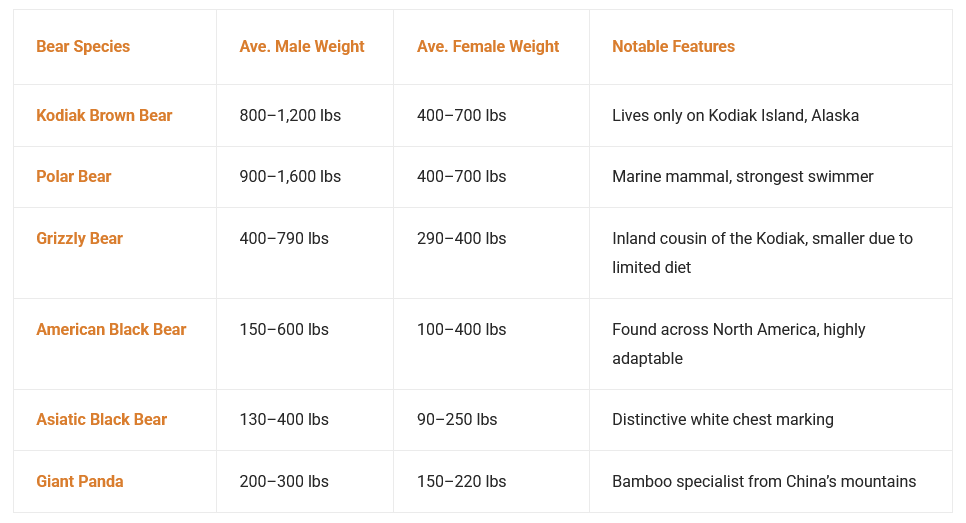
Bear SpeciesAve. Male WeightAve. Female WeightNotable Features
Kodiak Brown Bear800–1,200 lbs400–700 lbsLives only on Kodiak Island, Alaska
Polar Bear900–1,600 lbs400–700 lbsMarine mammal, strongest swimmer
Grizzly Bear400–790 lbs290–400 lbsInland cousin of the Kodiak, smaller due to
limited diet
American Black Bear150–600 lbs100–400 lbsFound across North America, highly
adaptable
Asiatic Black Bear130–400 lbs90–250 lbsDistinctive white chest marking
Giant Panda200–300 lbs150–220 lbsBamboo specialist from China’s mountains
A table compares six bear species by average male and female weights and notable features. Species listed: Kodiak Brown, Polar, Grizzly, American Black, Asiatic Black, and Giant Panda.

Although polar bears can sometimes edge out Kodiaks in sheer weight, Kodiak bears are generally bulkier in build. Their powerful shoulders and heavy frames reflect a life of digging, foraging, and defending territory on solid ground.

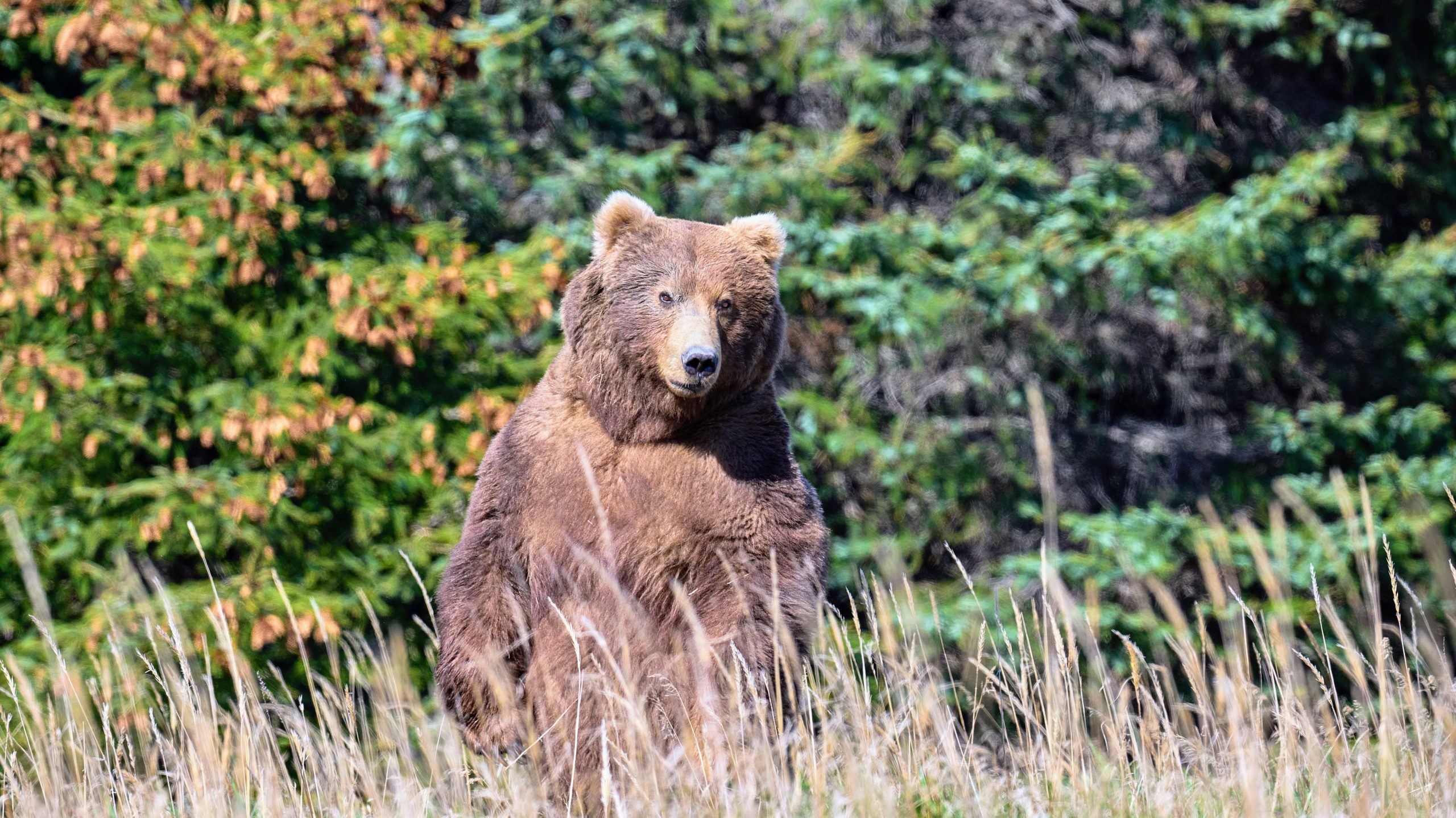
kodiak brown bear on back legs standing up
Dan M Lee - Kodiak Bear Standing 8ft Tall

Seasons of Change: How Weight Fluctuates Throughout the Year

Kodiak bears live by the rhythm of the seasons. In spring, after emerging from hibernation, they’re at their leanest. As summer progresses and salmon fill the rivers, their bodies rapidly recover. By late autumn, these bears have gained hundreds of pounds—sometimes adding up to 30% of their body weight in preparation for the long Alaskan winter.

This cycle is critical for survival. A well-fed Kodiak bear can endure months of hibernation without eating, living off stored fat until spring’s thaw signals the return of abundance.

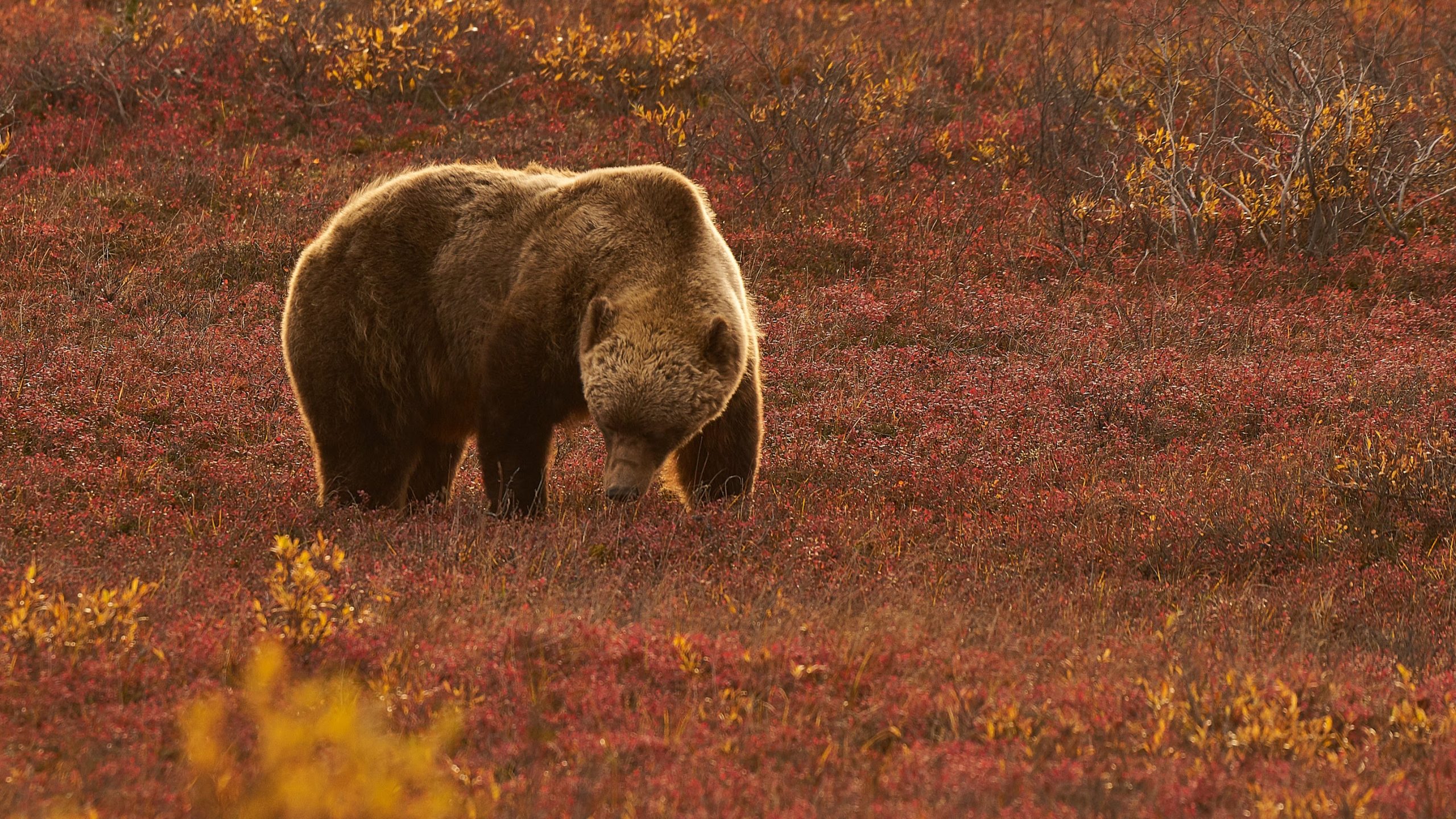
A brown bear with a thick fur coat walks through a field of low, reddish vegetation and autumn foliage, its head down as if foraging. The scene is bathed in warm, natural light.
Dan M Lee - Smaller "Grizzly" Bear

Witnessing the Giants Firsthand

There’s nothing quite like seeing a Kodiak bear in person. Standing within the wild heart of Alaska, surrounded by the scent of spruce and sea air, you understand why these animals inspire awe. Their power is matched only by their calm confidence—a presence that commands respect without aggression.

For those who visit the Kodiak Bear Center, these encounters are not just sightings—they’re moments of connection. Each observation helps deepen our understanding of these magnificent animals and supports ongoing conservation efforts that ensure future generations will know the giants of Kodiak Island.

bear viewing and fly fishing in Alaska

Ready for an adventure?