
Cama’i — welcome. There’s a difference between seeing a Kodiak brown bear and photographing one. From a crowded boardwalk you take home a memory; spend four to eight days with us on Karluk Lake and you take home a portfolio. This guide is for the second kind of trip.
The Kodiak brown bear (Ursus arctos middendorffi) is the largest brown bear on Earth — a subspecies found nowhere else. Big males stand over ten feet tall and can pass 1,400 pounds in a good salmon year. Set against rolling tundra and salmon-rich rivers, it’s as good as wildlife photography gets. But great frames come from being in the right place at the right time with the right settings — not luck. Here’s how to get them.
When to Come to Kodiak Brown Bear Center
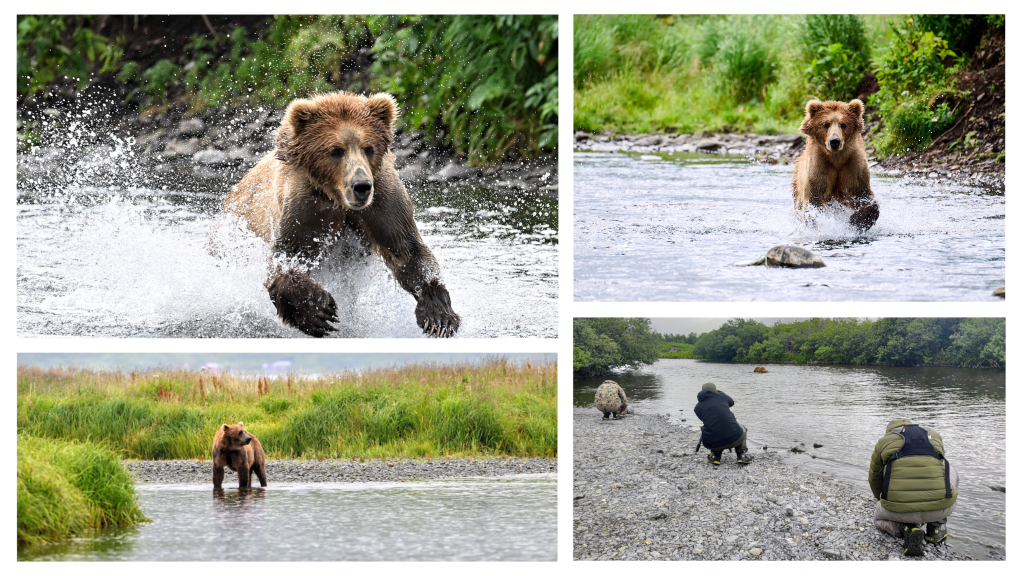
Each window has its own character. Early to mid-summer brings vivid green hillsides, long soft light, and intimate family scenes — sows with cubs grazing and wrestling. From around August 1, the salmon push up the Karluk system, bear concentrations climb, and the largest males arrive. This is when you capture the iconic frames: a bear lunging at a leaping salmon with water exploding around it. The northern light helps year-round — long golden hours and frequent overcast that acts like a giant softbox on dark fur. Our two daily outings put you on the water during the best light, not the harsh midday.
On Location
Each guided day visits one of three areas by boat or our 30-foot heated catamaran, so a multi-day stay builds real variety into your portfolio:
Thumb River — five minutes from the lodge, shooting from an elevated bluff that gives clean separation for fishing and foraging action.
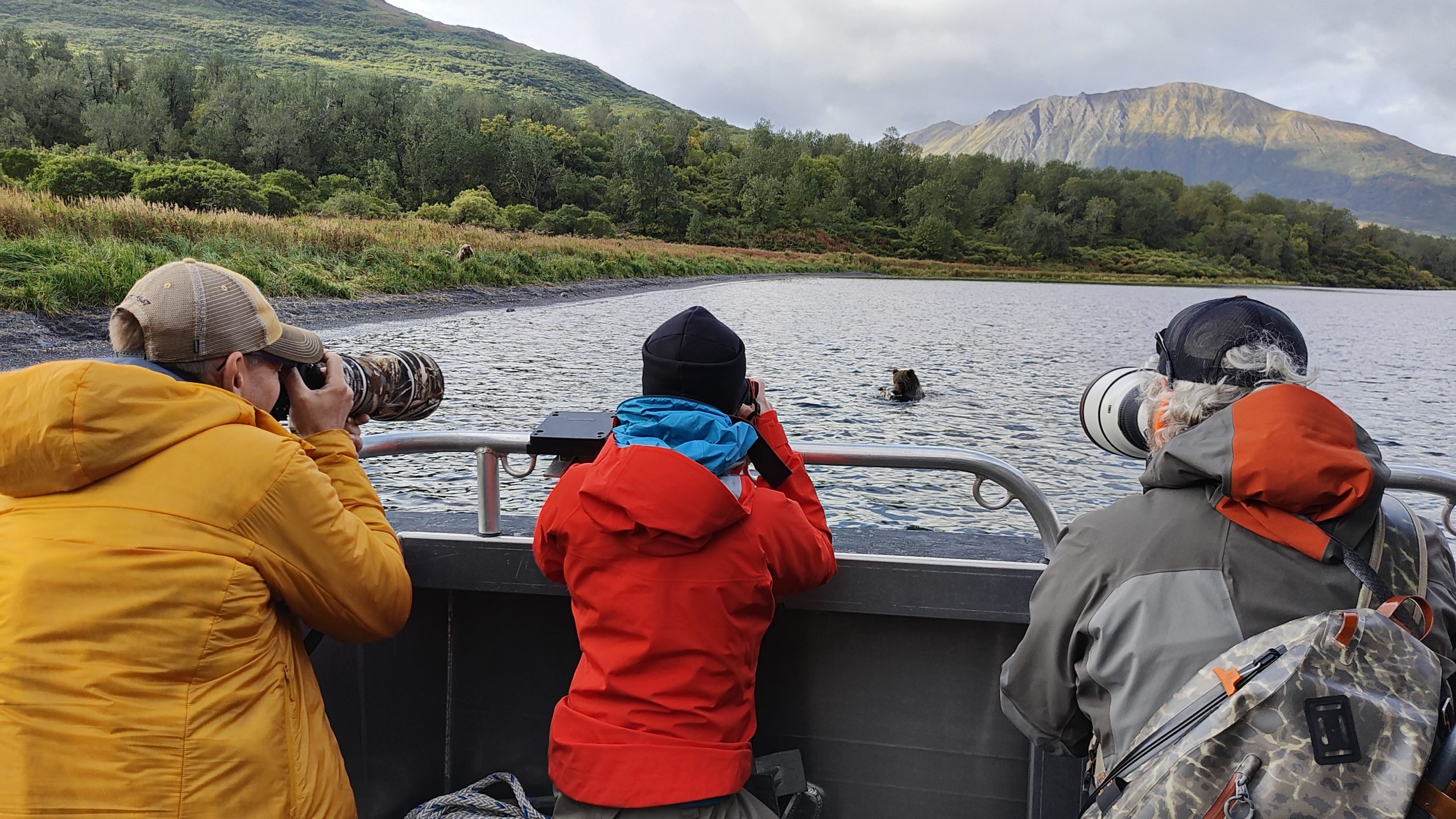
Karluk Lake shoreline — the catamaran becomes a stable, low, water-level platform you can reposition silently: effectively a floating hide for portrait-style frames and reflections.
Karluk Lake Outlet — a high bluff over ancient Alutiiq stone fish weirs, where bears fish reliably against a backdrop no other location can offer.
Camera Settings for Bear Photography
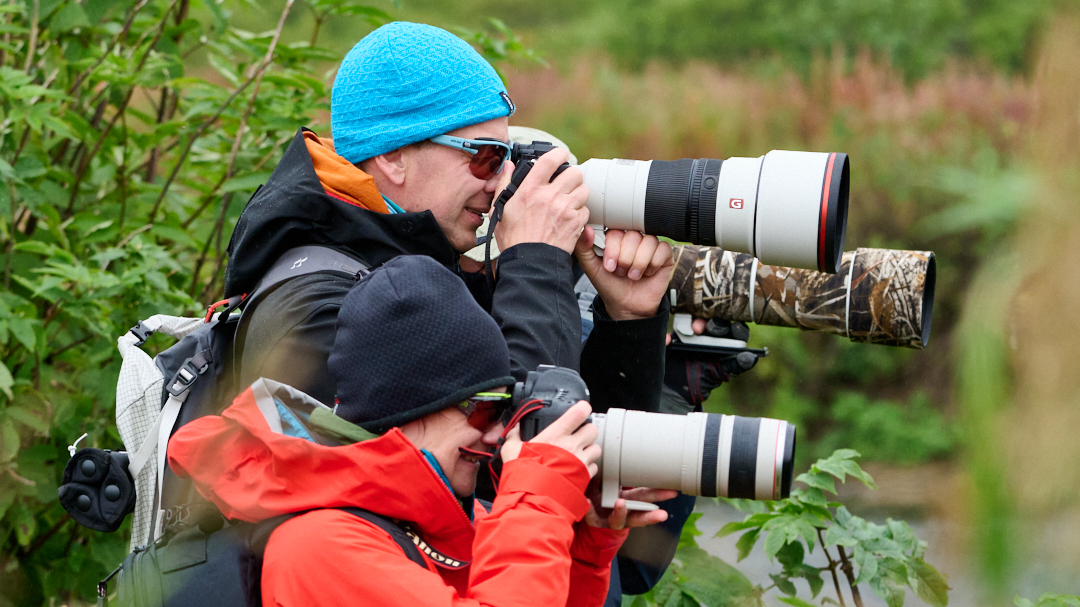
You don’t need the most expensive kit, but you need to react in seconds. A 100–400mm zoom is the most versatile single lens; a 500mm or 600mm prime adds reach. Bring something wider for environmental shots, plus far more cards and batteries than you think — bursts and cold days drain both fast.
Rain covers aren’t optional, Outex make some great cover options, as do Think Tank Photo.
- Shutter speed: the make-or-break number. Start at 1/1600s or faster for fishing action; 1/500–1/800s is fine for calm portraits.
- Aperture: around f/5.6–f/8 to isolate the bear, stopping down for family groups or environment.
- Auto ISO: set a minimum shutter speed and let the camera protect it while you focus on the bear — a sharp, slightly noisy frame beats a clean blurry one.
- Autofocus: continuous/servo AF with animal eye-detection if you have it — it’s transformative on bears.
- Drive mode: high-speed burst; the keeper is usually frame seven of ten.
- Exposure compensation: dark fur fools meters, so dial in roughly -1/3 to -1 stop and check the histogram.
Shoot near eye level where it’s safe, watch for the catchlight, leave room for movement — and don’t be afraid to pull back and place a single bear in the grandeur of Karluk Lake.
We invite you to visit our home, and promise unforgettable memories of your time spent in the heart of Alaska’s wilderness.
— Kodiak Brown Bear Center & Lodge, Alutiiq-owned since time immemorial
Plan Your VisitPhotograph Ethically
A great photo is never worth stressing a wild animal. Let your guide set distance and positioning; never bait, lure, or call; keep noise and movement low; give bears space and an exit (never between a sow and cubs); and leave no trace on what is both Alutiiq homeland and a national wildlife refuge.
It’s worth learning about behaviors of these giant brown bears before you go
Relaxed bears make the best photographs — ethics and great images go hand in hand here
Limited to 8 Guests
Your Private Alaskan Wilderness Retreat Awaits
Stay in private cabins on Karluk Lake — home to the highest concentration of Kodiak brown bears. All-inclusive packages from $5,600 pp.
Why Stay at KBBC
Plenty of operators let you view a bear; we’re built to help photographers work one. Strictly limited group sizes mean clean backgrounds and natural behavior. Four to eight days with two outings daily let you return to the same bears, learn their patterns, and wait out the weather — the single biggest reason serious photographers out-shoot day visitors. Add three distinct locations, the catamaran hide, water’s-edge cabins with their own decks, provided rain gear and boots, home-cooked meals, and on-site bear researchers, and you have a true photographer’s basecamp.
Stays start from $5,600 per person, all-inclusive — not the price of a sightseeing trip, but of multiple days of guided, low-impact access to the largest bears on Earth.
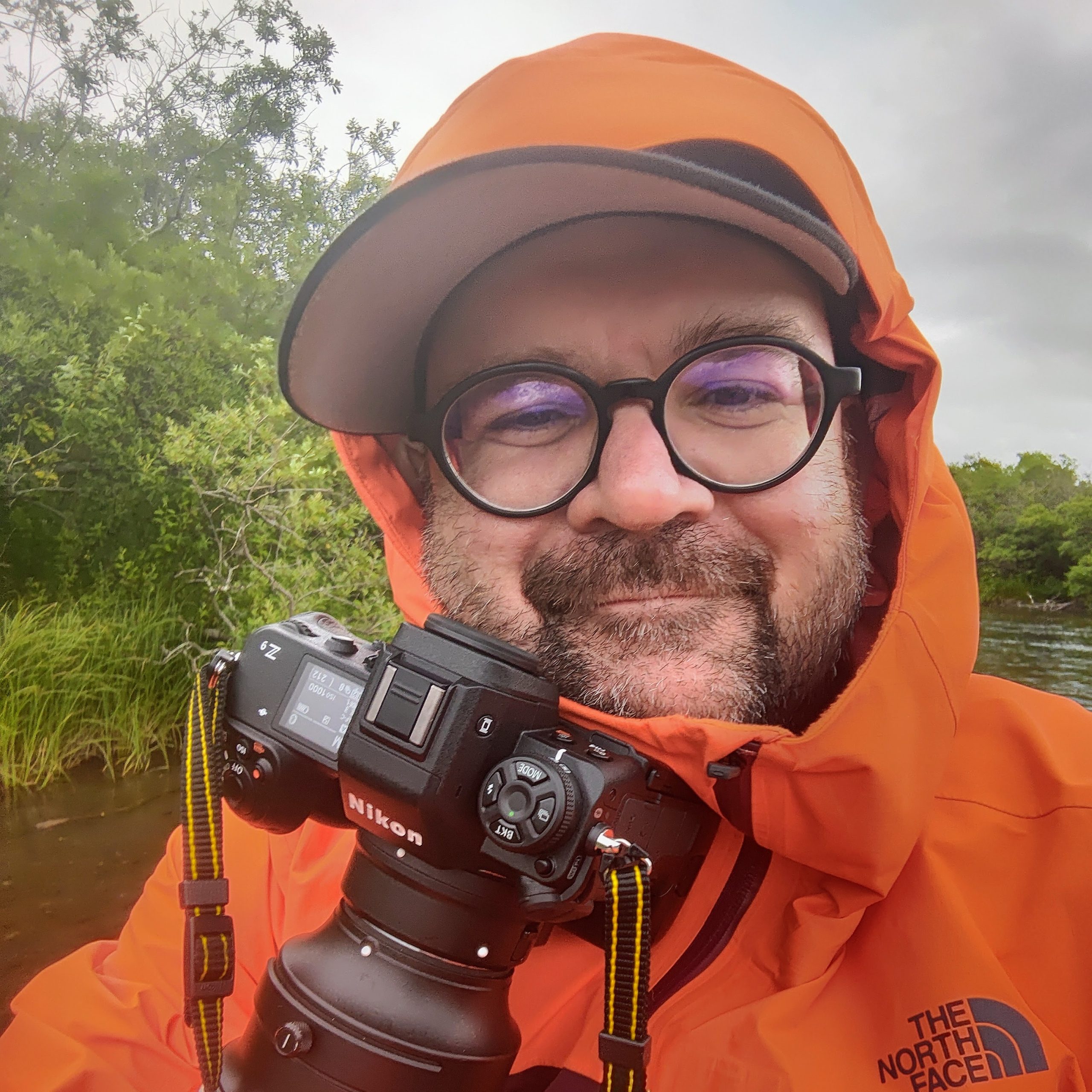
Content Author & Alaska Photographer
I lead photography workshops at the Kodiak Brown Bear Center and create engaging, high-quality content for blogs and websites across Alaska and beyond. My deep passion for wildlife—especially Kodiak bears—continually inspires my work and fuels my storytelling.